
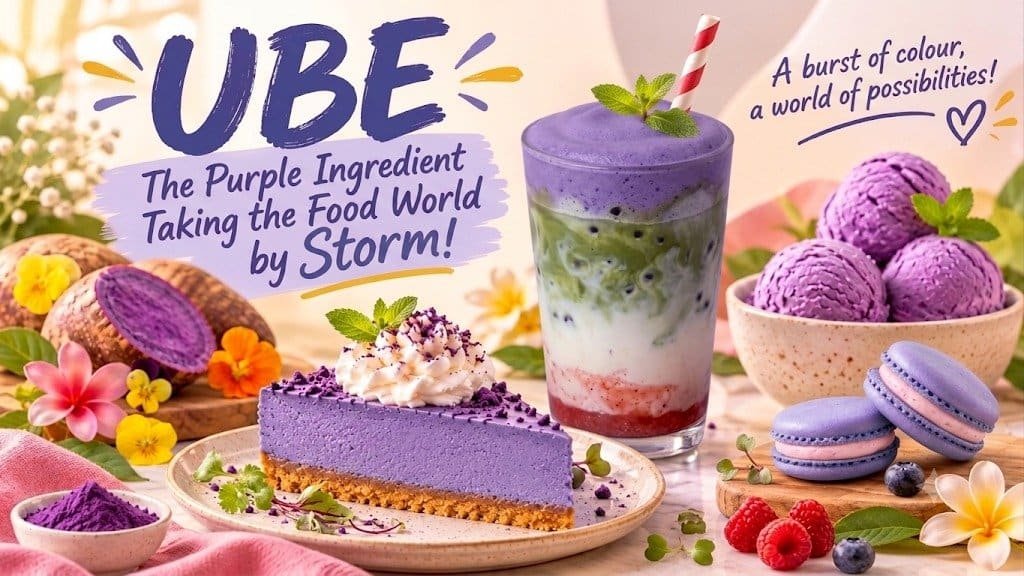
From traditional Filipino desserts to trendy lattes – discover the purple food sensation everyone’s talking about!
Imagine sipping a bright purple latte, enjoying a creamy violet cheesecake or indulging in a scoop of beautifully coloured ice cream. Sounds tempting, doesn’t it?
Meet UBE – the purple yam that’s bringing a colourful twist to the global food scene!
Once a traditional favourite in Filipino kitchens, ube is now making its way into cafés, bakeries and dessert menus around the world. Its eye-catching colour, mildly sweet taste and unique flavour have made it one of the most exciting ingredients to explore.
But what makes this purple ingredient so popular? Let’s find out!
Meet Ube – The Purple Ingredient Taking the Food World by Storm
Ube (pronounced oo-beh) is a purple yam scientifically known as Dioscorea alata. It is particularly popular in the Philippines, where it has been used in traditional desserts for generations. What makes ube stand out is its naturally vibrant violet colour, which gives food products an attractive appearance without relying on artificial colours.
Beyond its appearance, ube has a distinctive flavour profile that is mildly sweet, earthy and slightly nutty, with subtle hints of vanilla. When cooked, it develops a smooth and creamy texture, making it suitable for a wide range of food applications. Its versatility allows it to be incorporated into desserts, beverages, bakery products and snacks, making it an interesting ingredient for innovative food product development.
The Purple Trend Taking Over the Food Industry
Food trends today go beyond taste, with consumers seeking unique flavours, attractive colours and memorable food experiences. Ube brings all these elements together, making it a rising star in the global food market. Its vibrant purple colour makes products visually appealing and highly shareable on social media, while its mildly sweet, distinctive flavour attracts consumers interested in exploring new food experiences. Originating from traditional Filipino cuisine, ube is now gaining global attention, particularly in café-style products such as iced lattes, milkshakes and specialty beverages. Its natural colour and versatility further add to its appeal in modern food innovation.
A Purple Twist to Everyday Foods
Ube is no longer limited to traditional Filipino desserts. Its unique colour, flavour and creamy texture have encouraged chefs, food manufacturers and product developers to explore its potential across various food categories.
In beverages, ube is used in lattes, coconut milk drinks, milkshakes and iced coffee. In bakery and desserts, it adds a colourful twist to cheesecakes, brownies, cookies, macarons and doughnuts. Its applications also extend to frozen desserts and snacks, including ice creams, gelato, frozen yoghurt, popsicles, purple yam chips, crackers and snack bars. From everyday snacks to premium café products, ube offers exciting opportunities for creative food product development.
More Than Colour: The Goodness Within Ube
Ube is more than just a visually appealing ingredient; it also offers nutritional benefits. Its natural purple colour comes from anthocyanins, plant pigments known for their antioxidant properties and potential role in protecting cells against oxidative stress.
Ube also provides dietary fibre that supports digestive health, along with resistant starch that may benefit gut bacteria. Additionally, it contains carbohydrates that provide energy and minerals that contribute to its nutritional value. With its attractive colour, unique flavour and nutritional components, ube offers exciting opportunities for developing innovative food products.
From Purple Yam to Trending Food Innovations
- Ube Coconut Protein Drink: A plant-based beverage combining Ube, coconut milk and plant protein. It can be developed as a ready-to-drink functional beverage or an instant protein drink mix.
- Ube Breakfast Granola: A nutritious breakfast concept combining oats, nuts, seeds and Ube powder. It can be developed into crunchy granola clusters or ready-to-eat breakfast cereal.
- Ube Coconut Spread: A creamy spread developed using Ube and coconut, offering a distinctive alternative to conventional fruit spreads and sweet spreads. It can be used as a bread spread or as a filling for bakery products.
- Ube Energy Bites: A convenient snack made with Ube, dates, nuts and seeds. It can be explored as a bite-sized snack option with opportunities for plant-based product development.
- Ube Mochi Bites: A chewy, bite-sized dessert prepared using glutinous rice flour and Ube. This product combines traditional Asian textures with modern snack formats.
- Ube Cream Sandwich Cookies: Cookies filled with a creamy Ube-flavoured filling, offering a colourful twist to conventional sandwich biscuits.
Is Ube the Next Matcha?
Matcha has already taken over café menus with its signature green colour. Now, ube is attracting attention with its beautiful purple appearance and distinctive flavour.
Both have become popular choices for consumers looking for something different from conventional coffee and chocolate-based drinks.
Could purple lattes be the next big café favourite? Ube certainly has the potential to make its mark!
Final Thoughts: Purple Is the New Food Crush!
From traditional Filipino kitchens to modern cafés, ube is proving that a familiar ingredient can become a global sensation.
Its vibrant colour, unique taste and versatility make it much more than just another food trend.
Whether it’s a creamy ube latte, a slice of purple cheesecake or a scoop of ube ice cream, this purple yam is giving food lovers plenty of reasons to fall in love with something new.