
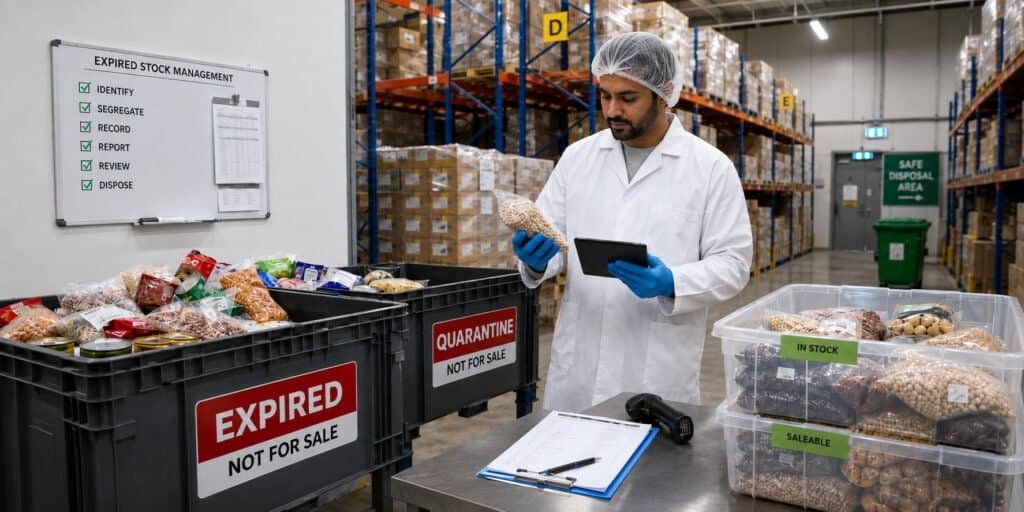
Every product that manufactured, packaged & sold, whether food or medicine carries a shelf-life. Once the shelf-life comes to an end, the product enters what is commonly called its “Expiry” stage. Handling expired products correctly is not just good business practices, it is a legal, ethical & public health responsibility shared by manufacturers, distributors, retailers & consumers. Mishandling expired goods through careless storage, delayed removal, resale can lead to health hazards, financial loss & legal penalties.


Why Proper Handling Matters?
Expired products, especially food & pharmaceuticals can lose their intended safety, potency or nutritional value. Consuming or using them may cause anything from mild discomfort to serious illness. Beyond the health angle, businesses that fail to manage expired stock properly risk regulatory action, loss of license & lasting damage to consumer trust. On the environmental side, expired goods that are dumped carelessly contribute to landfill waste, pollution & in the case of food unnecessary greenhouse gas emissions.
Best Practices for Handling Expiry Products
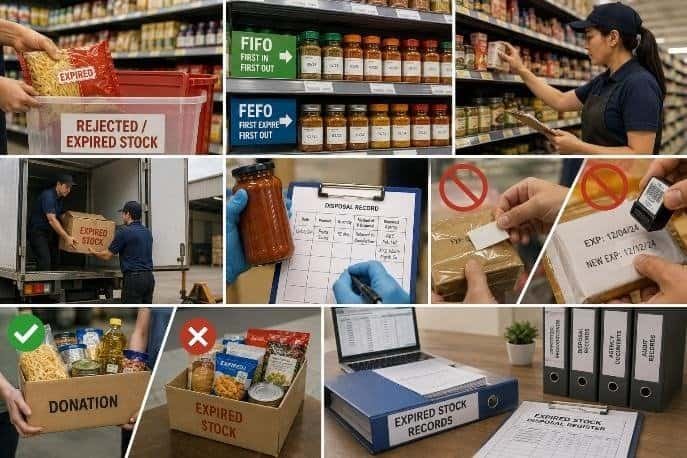
Segregation: As soon as a product is identified as nearing expiry or expired, rejected or recalled, it should be physically separated from saleable stock. Clear labelling & a dedicated storage area prevent it from accidentally re-entering circulation.
Stock Rotation (FIFO/FEFO): Businesses are expected to sell or use older stock before newer stock, following First-In-First-Out or First-Expire-First-Out principles. This naturally reduces the volume of goods that reach expiry unsold.
Timely Removal: Retailers/store person must check shelves regularly & pull expired items immediately rather than waiting for a periodic audit. Ecom business shall ensure that the product sold has at least 30% or 45 days remaining of the shelf life.
Authorised Disposal: Expired stock should never be thrown out with regular waste. It must be returned to the manufacturer or destroyed under supervision or handed to an authorised waste disposal agency with proper records maintained of quantities & the agency involved.
| Source | What to do |
| Retail Stores/ Dark Stores/ Supermarkets | Remove expired stock immediately and return to the supplier or authorized food waste handler; maintain records |
| Food Manufactures | Destroy expired or returned / recalled products or hand it over to authorized waste handler; maintain records |
| Restaurants / Canteen / Caterers | Segregate expired items and destroy or hand it over to authorized waste handler; maintain records |
| Consumers | Do not consume expired food; dispose responsibly or compost if safe and biodegradable |
| Food Banks/ NGO | Only accept and distribute food within shelf life and approved safety conditions. |
No Resale or Relabelling: Repackaging, relabelling or altering the printed date on an expired product to make it appear fresh is illegal.
Responsible Donation: Donation of surplus goods to food banks or charities is encouraged, but only while the product is still within its shelf life. Expired stock is never suitable for donation.
Record-Keeping: Every stage from identification of expired stock to its final disposal should be documented. This protects the business for maintaining traceability and also having evidence to support during audits or investigations & demonstrates compliance with regulatory norms.
What FSSAI Says?
In India, the handling of expired food products is directly regulated by the “Food Safety & standards Authority of India (FSSAI). Under its licensing regulations, food businesses are required to segregate rejected, recalled & expired stock & keep it distinctly marked so it cannot mix with saleable inventory & to follow FIFO/FEFO systems for storing & rotating products. Since December 2024, FSSAI has also mandated that licensed manufacturers, repackers, relabellers & importers submit quarterly reports through its FoSCoS portal detailing the quantity of expired or rejected products & exactly how each batch was disposed of whether destroyed, auctioned or repurposed including the identity of the buyer or waste disposal agency involved. This was introduced specifically to stop expired or rejected food from being illegally rebranded & resold, including cases where it is disguised as animal feed. Separately, under Food Safety & Standards (Food Recall Procedure) regulation, 2017. Selling expired food remains a punishable offence under the Food Safety and Standards Act, attracting fines, potential imprisonment, and cancellation of the food licence.
Penalties For Non-Compliance in India
The FSS Act, 2006 backs up FSSAI’s handling requirements with specific financial & criminal penalties, so that expiry mismanagement is not just a compliance lapse but an enforceable offence. Selling food that is substandard carries a penalty of up to 5 lakhs under section 51, while misbranded food including incorrect or misleading information on the label, which covers wrong expiry details attracts a penalty of up to 3 lakhs under section 52. Where unsafe food is sold & causes no injury, the law allows for imprisonment & fines that scale up sharply if the food causes injury, grievous hurt or death, with death cases carrying imprisonment from seven years to life alongside a minimum fine of 10 lakhs. In every case, the adjudicating officer also has the power to order corrective action or have the offending stock destroyed outright, reinforcing that expired or mislabelled stock cannot be fined & left in circulation.

Conclusion
Handling expiry products responsibly protects consumers, safeguards businesses from legal & reputational harm & reduces environmental damage. It requires a consistent system from proper segregation & stock rotation to authorised disposal & transparent record keeping rather than a one-time cleanup effort. Regulatory bodies like FSSAI have made this a formal compliance requirement, but ultimately responsible handling of expired goods depends on every link in the chain from manufacturer to consumer taking the issue seriously.
For more information on maintaining safe and effective food storage practices, read our article on Storage Practices.