
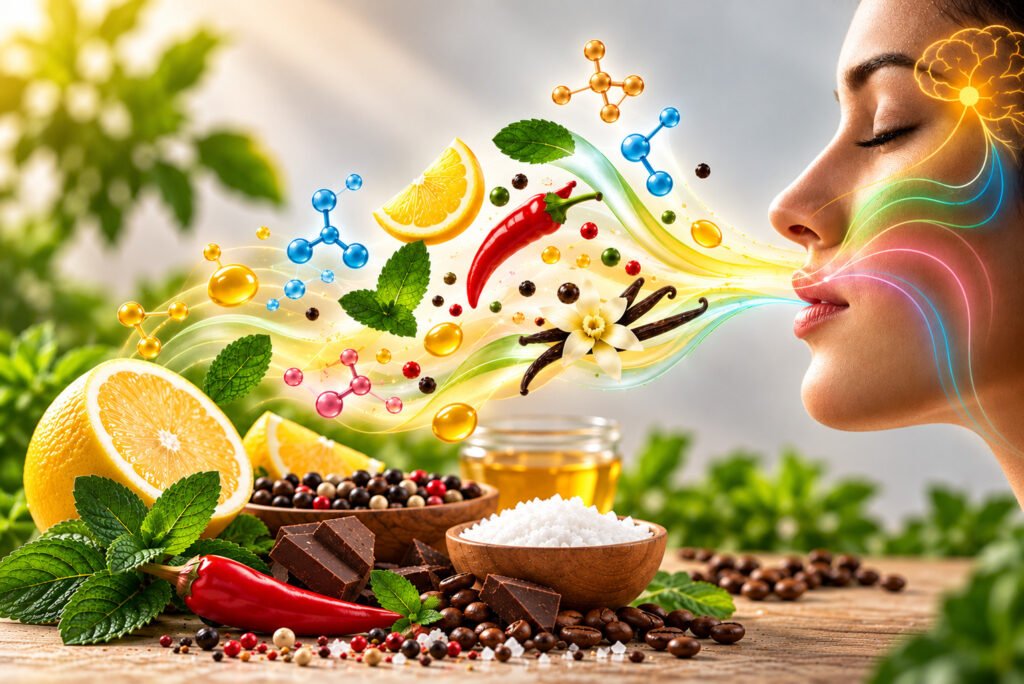
Have you ever wondered why the same food can taste completely different depending on how you experience it? Or why the aroma of freshly prepared biryani can reach you from a distance and make you hungry before you even see it? Eating may seem like a simple everyday activity, but the experience of flavor is actually the result of a complex interaction between our taste buds, nose, temperature, texture, and the chemical compounds present in food.
When we take a bite of food, numerous chemical and sensory signals are generated. Taste receptors detect basic tastes, the nose identifies aromas, while factors such as temperature and texture influence the overall sensory experience. Together, these sensations create what we recognize as flavor. From a food technologist’s perspective, understanding this interaction is important for developing foods that are not only safe and nutritious but also appealing to consumers.

Five Basic Tastes
The five basic tastes are sweet, salty, sour, bitter, and umami. Contrary to the popular tongue map, the tongue does not have separate zones for each taste. Taste buds across different areas of the tongue can detect all five tastes, although sensitivity may vary slightly between regions.
Sweetness is mainly associated with sugars and other sweet-tasting compounds. It is important in products such as beverages, confectionery, bakery products, fruits, and desserts. The intensity of sweetness depends on factors such as the type and concentration of sweetener, temperature, acidity, and other ingredients
Saltiness is mainly associated with sodium chloride. Salt does more than provide a salty taste—it also influences the perception and balance of other flavors. Therefore, reducing salt in products such as snacks, soups, and sauces requires careful formulation.
Sourness is associated with acids such as citric acid in citrus fruits, malic acid in apples, and lactic acid in fermented foods. Acidity can provide freshness and balance sweetness, making it particularly important in beverages and fruit products.
Bitterness is produced by a wide variety of compounds and occurs naturally in foods such as coffee, tea, grapefruit, cocoa, dark chocolate, and some vegetables. Moderate bitterness can contribute positively to a product, but excessive bitterness can reduce consumer acceptance. This is particularly important when working with plant proteins, botanical extracts, and functional ingredients.
Umami is often described as a savory or broth-like taste and is associated with compounds such as glutamate. Tomatoes, mushrooms, cheese, meat, and fermented foods are natural sources. Umami can add depth and richness to savory products.
In real foods, these tastes rarely appear alone. Their balance and interaction help create the characteristic flavor of a product.
Flavor Is More Than Taste
Taste is only one part of flavor. Aroma plays a major role, both before and during eating. Volatile compounds released from food can be detected by the nose and contribute strongly to its characteristic flavor.
Temperature can influence how easily these volatile compounds are released. Warm foods generally release aroma compounds more readily than colder foods. This helps explain why the aroma of freshly cooked biryani can travel through a room and reach you before the plate does. Ice cream, being much colder, generally releases its aroma less readily until it begins to warm in the mouth.
Flavor is also influenced by the physical properties of food. The crispness of an apple, creaminess of chocolate, smoothness of ice cream, and temperature of a beverage can all affect our overall sensory experience.
There are also sensations that are not considered basic tastes. The burning sensation produced by chili peppers and the cooling sensation caused by mint are examples of chemesthetic sensations. These involve sensory pathways associated with the trigeminal system and add another dimension to the experience of eating.
Why Flavor Science Matters to the Food Industry
Understanding flavor perception has important applications in food product development.
Creating healthier foods is not simply a matter of reducing sugar, salt, or fat. These components contribute to sensory characteristics, and changing their levels can affect taste, texture, mouthfeel, and overall consumer acceptance.
For example, reducing fat may influence creaminess and mouthfeel, while reducing sugar changes sweetness and may alter how other flavors are perceived. Similarly, reducing salt can make a product seem less flavorful.
Understanding how sensory components interact is therefore important when developing functional foods, plant-based foods, nutritional products, and foods containing bioactive compounds.
The Flavor Experience Is More Complex Than We Think
The next time you enjoy a favourite food, remember that the experience began long before you consciously decided that it tasted good.
Molecules from the food interact with taste receptors. Aromatic compounds stimulate the olfactory system. Texture and temperature activate sensory receptors in the mouth. These signals are transmitted to the brain, where they are combined with memories, emotions, expectations and information about the body’s physiological state.
The result is the experience we call flavor.
Understanding this process gives us more than an explanation of why food tastes the way it does. It provides scientists with the tools to redesign foods, improve pharmaceutical formulations, develop effective taste-masking systems and create products that are both functional and enjoyable.
In the end, flavor is not simply something detected by the tongue. It is an experience constructed by the entire sensory system—and the brain is at the center of it all.