

When you bite into a chocolate bar, sip a glass of milk, or enjoy a plate of biryani, food safety is probably not the first thing on your mind. However, behind the scenes, a silent army of systems and practices is working diligently to ensure that your food is not only delicious and nutritious but also safe. In fact, these foundational measures operate continuously, creating an environment where hazards are prevented before they even reach your plate. This army is made up of Prerequisite Programs (PRPs) — the foundation of every Food Safety Management System (FSMS).
What Exactly Are PRPs?
Think of PRPs as the ground rules of hygiene and safety in the food industry. They are the essential practices and conditions that must exist both before and alongside HACCP implementation. Meanwhile, while HACCP focuses on identifying and controlling specific hazards, PRPs simultaneously create the environment that makes effective hazard control possible in the first place.
Without strong PRPs, HACCP is like building a castle on sand.
Some examples include:
- Sanitation and cleaning programs
- Preventive maintenance of equipment
- Pest control measures
- Waste handling and disposal systems
- Allergen control measures
- Proper air and water supply systems
- Personal hygiene practices
Each of these works like a safety net, ensuring that hazards don’t even get the chance to enter the food chain.
Why PRPs in Food Safety Matter More Than You Think
When a PRP fails, food safety gaps emerge. For example:
- Poor pest control → rodent contamination in raw materials.
- Ineffective cleaning → bacterial biofilms thriving on equipment.
- Weak allergen management → accidental cross-contact that could trigger life-threatening allergic reactions.
This is why PRPs must be documented, monitored, and regularly audited. They’re not “set and forget” systems — they require continuous improvement.
Building Blocks of PRPs in Food Safety
PRPs can look different depending on the sector (farming, processing, catering, retail, packaging, etc.), but most FSMS guidelines recognize a few core categories:
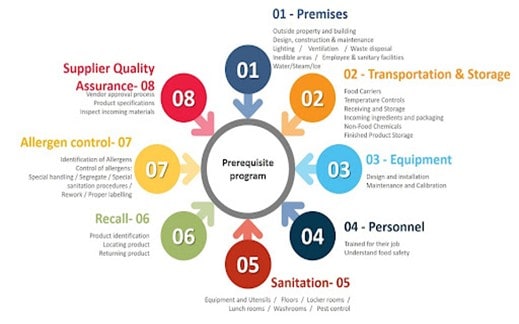
- Building and Infrastructure – Well-designed premises that support hygienic operations.
- Design and Layout – Logical flow of people, materials, and products to avoid cross-contamination.
- Cleaning & Disinfection – Regular and validated cleaning schedules.
- Maintenance Programs – Planned servicing to avoid breakdowns and contamination.
- Waste Management – Safe, timely disposal to avoid pest attraction.
- Pest Management – Proactive monitoring and control of pests.
- Air & Water Supply – Clean, potable water and filtered air for operations.
- Personal Hygiene – Training, protective clothing, and health checks.
- Allergen Management – Clear labeling, segregation, and handling practices.
- Storage Procedures – Controlled temperature, humidity, and stock rotation.
- Vendor Selection & Management – Ensuring suppliers meet safety requirements.
- Cross-Contamination Prevention – Zoning, color coding, and barriers.
- Lighting & Environment Control – Adequate lighting, ventilation, and safe workspaces.
Together, these create a “hygienic bubble” in which safe food can be produced.
Evolving PRPs: Enter ISO 22002 and the New ISO 22002-100:2025
Food safety is never static. As a result of new risks, emerging technologies, and changing consumer expectations, PRPs must also evolve. That’s where ISO/TS 22002 standards come in. They provide sector-specific guidance for PRP implementation.
Examples include:
- ISO/TS 22002-1: Food Manufacturing
- ISO/TS 22002-2: Catering
- ISO/TS 22002-3: Farming
- ISO/TS 22002-4: Packaging manufacturing
- ISO/TS 22002-5: Transport and storage
And the latest addition ISO 22002-100:2025. This newly introduced standard provides a generic, overarching framework for PRPs, offering more flexibility and harmonization across different food chain sectors. It acts as a unifying guide, making it easier for organizations to align with FSSC 22000 v6.0 and other global requirements.
Conclusion: Why PRPs Deserve More Attention
Although PRPs may not receive the spotlight like HACCP, they serve as the backstage crew that ensures the show runs smoothly. Without these essential programs, food businesses would, instead, be constantly fighting fires rather than preventing them.
For food businesses, investing in strong PRPs means:
- Higher consumer trust
- Easier compliance with global standards
- Fewer recalls and crises
- A culture of proactive food safety
So, the next time you enjoy your meal, remember — it’s not just machines and people making it safe. It’s the invisible but powerful framework of PRPs working day and night.