
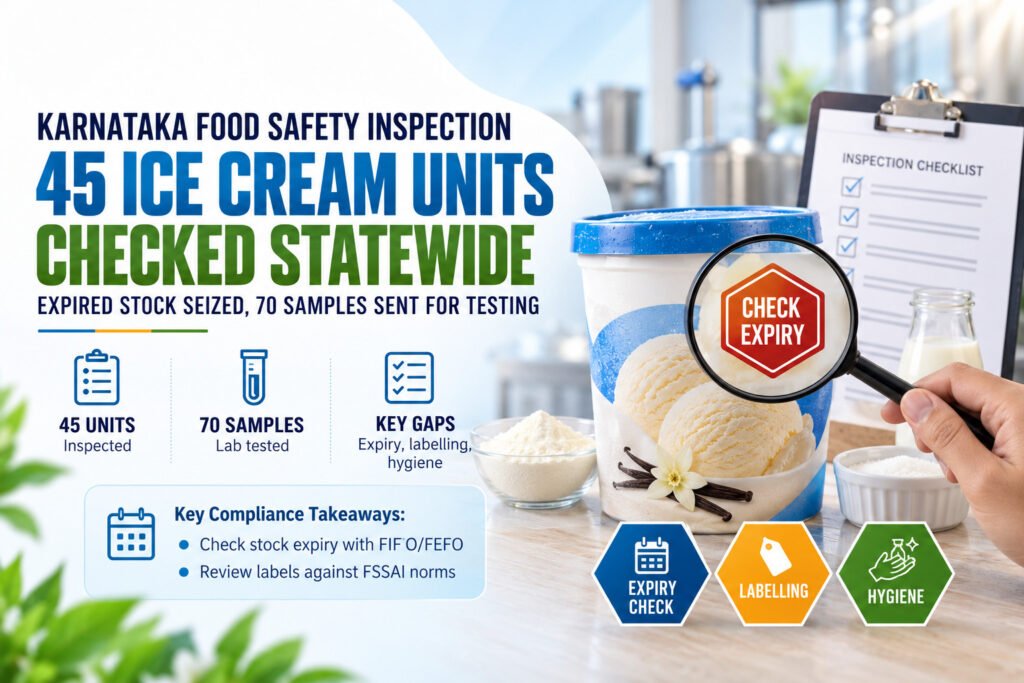
Overview of the Karnataka Ice Cream Inspection Drive
In early October 2026, Karnataka’s Food Safety and Drug Administration Department carried out a statewide food safety inspection of 45 ice cream manufacturing units. The State Health and Family Welfare Department ordered the drive, which was run under the Food Safety and Standards Act, 2006 and the Food Safety and Standards (Licensing and Registration of Food Businesses) Regulations, 2011.
70 Ice Cream and Raw Material Samples Sent for Testing
Officials collected 70 samples during the inspections. These covered finished ice cream as well as key raw materials such as milk, milk powder, sugar, flavouring substances and food additives. The samples have gone to government food laboratories to check their quality and whether they meet FSSAI standards.
Key Findings from the Food Safety Inspection
The inspection found several common compliance gaps across ice cream units in Karnataka:
- Expired raw materials in storage: At units in Bengaluru, officials seized expired stock including milk, biscuits, tea and coffee premixes, desiccated coconut powder, caramel, condensed milk and khoa.
- Labelling deficiencies: Several units, including ones in Bengaluru and Mysuru, did not meet labelling requirements. In Mysuru, ice cream products worth about ₹20,000 were seized.
- Poor hygiene: A unit in Raichur was issued a notice over unhygienic conditions.
The department has said it will take further legal action against non-compliant units, and that food safety inspections will continue across the state.
FSSAI Compliance Lessons for Ice Cream and Dairy Businesses
Most of these findings come down to everyday controls rather than complex failures. Ice cream and dairy manufacturers should review the following areas.
Stock Rotation and Expiry Control
Use FIFO/FEFO practices, check raw material shelf life regularly, and clearly separate and dispose of expired stock so it can’t end up in production.
Ice Cream Labelling Requirements
Make sure labels meet the FSSAI (Labelling and Display) Regulations, 2020. Labels should include the product name, ingredients, allergen declarations, nutritional information, FSSAI licence number, and batch and date marking.
Hygiene and Sanitation Practices
Keep documented cleaning schedules, pest control records and personal hygiene practices in place, and check them regularly through internal audits.
Raw Material and Supplier Checks
Ingredients like milk, milk powder and additives should come from approved suppliers, with certificates of analysis and incoming inspection records.
How Food Safety Works Can Help
Food Safety Works supports food businesses with FSSAI licensing and compliance, gap assessments, internal and third-party audits, labelling reviews and FoSTaC training. Through myFssai, our compliance platform, businesses can also track licences, records and audit actions in one place.
To find out how inspection-ready your operations are, contact us at info@foodsafetyworks.in or +91 8088470480.