
NEW FSSAI RULES FOR PACKAGED FOOD LABELING
In the spirit of Benjamin Franklin’s words — “An ounce of prevention is worth a pound of cure” — the Food Safety and Standards Authority of India (FSSAI) released a draft notification on June 27, 2019. It seeks to mandate packaged food companies to label foods high in fat, sugar, and salt on the front of the package, using a traffic light signalling system.
The overall objective is to help all consumers make informed choices about their diet.
One of the most notable points in the draft rules is Front-of-Pack (FoP) labelling. A red-coloured warning symbol will identify foods that are high in calories, saturated fats, trans fats, added sugar, and salt. The FoP label will also show the number of calories and the amount of salt, added sugar, and fats per serving.
Consumers can easily see how much of their recommended dietary allowance (RDA) they will consume by eating one serving, enabling everyone to make healthier, informed decisions.
Why is this important?
Here’s a revised version of your text with inclusive language:
Obesity — being significantly overweight — raises the risk of hypertension, diabetes, and cardiovascular disease. It can also affect mental and emotional well-being, contributing to depression, low self-esteem, and reduced confidence. These health concerns are rising worldwide and affect people of all genders, ages, and backgrounds. The situation in India is no different. According to the medical journal “The Lancet,” India had 30 million people living with obesity in 2016. The number is projected to exceed 70 million by 2025.
Overall, however, the draft regulations have been welcomed by consumers. In a press release issued by the Centre for Science and Environment, New Delhi, its director general Sunita Narain said, “This is a big step, which will enable people to identify unhealthy foods that are high in fats, sugar or salt. It should help to contain the growing incidence of obesity and non-communicable diseases.” In an online poll through our Facebook page FoodSafetyWorks, consumers came out with overwhelming support to implement the colour coding scheme. Of course, the data is limited to the audience we were able to reach.
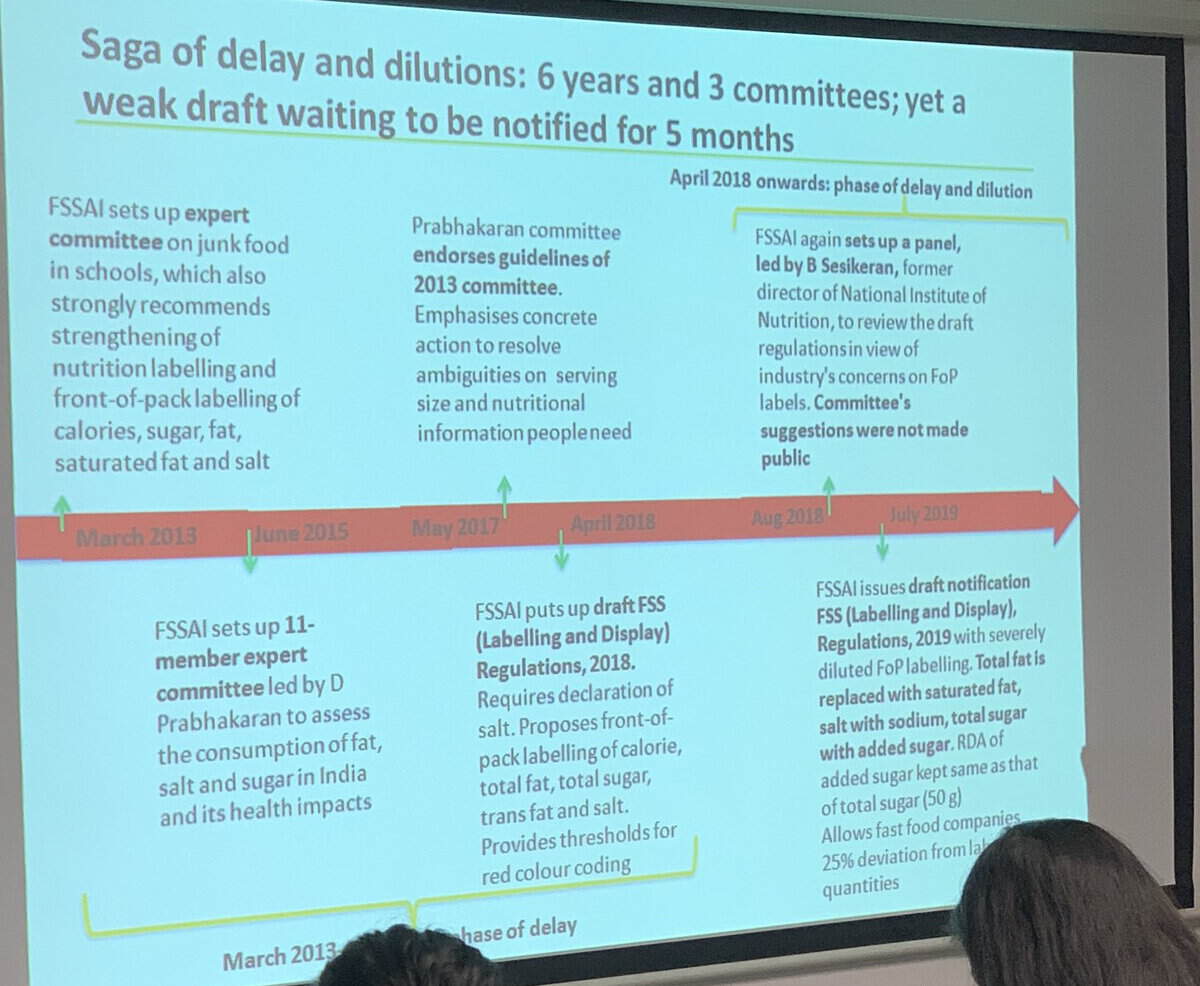
Update: 18th Dec 2019: The Center for Science and Environment (CSE) released a report on the labelling saga. The report highlights that we have made little progress even after six years and three committees. It comes five months after the 2019 notification, which is a much watered-down version of the 2018 draft regulation.
New data from other countries that have implemented this system is now available. Hopefully, we can learn from their experience and adopt a system that helps consumers make informed choices. You can watch the full press conference video here.
Read the full article –http://citizenmatters.in/food-safety-standards-authority-colour-coded-labelling-of-packaged-food-13810 . Article written by Disha Majhi, works as Senior Associate Consultant for Food Safety Works.For more food safety related articles and upcoming training visit http://foodsafetyworks.com