
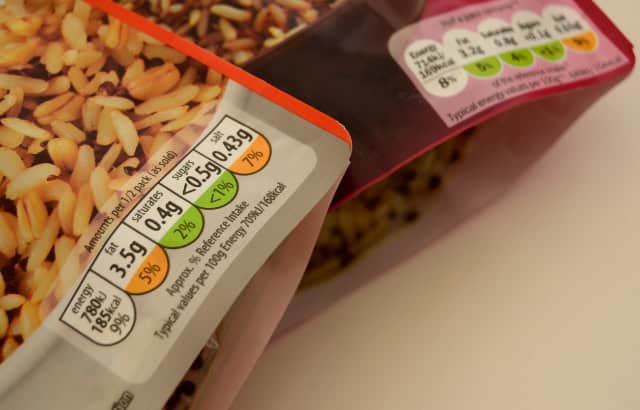
In the recent UNICEF report on child nutrition titled “FEEDING PROFIT: How food environments are failing children,” the agency highlights a worrying rise in childhood obesity worldwide. Furthermore, the report stresses that aggressive marketing of ultra-processed foods creates unhealthy food environments, fueling a global health crisis. Consequently, there is an increased need for clearer nutrition communication tools like Front-of-Pack Nutrition Labelling, which help consumers quickly assess the healthiness of packaged foods and make informed choices.
The report discusses the “food environment.” It defines this as the spaces where people decide what food to procure, prepare, and consume.
The food environment includes the external and internal environments.
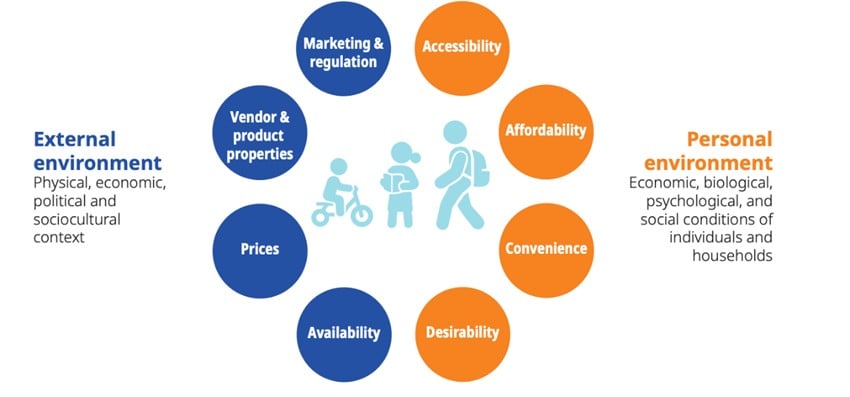
Source: UNICEF
Consequently, in an effort to positively influence this food environment and combat unhealthy diets, the report recommended eight regulatory actions, including food taxes, reformulations, marketing, and labelling, among others.
Specifically, the regulatory action the report recommends for food labelling is the implementation of mandatory Front-of-Pack Nutritional Labelling (FoPL).
History of Nutrition Labelling:
Nutritional labelling was first introduced in the USA as the Nutrition Facts panel, laying the foundation for modern systems like Front-of-Pack Nutrition Labelling. Subsequently, the FDA mandated it to protect consumers and improve transparency. These labels were first implemented in the US in 1994 and later in the UK in 1996, helping consumers make more informed decisions.
The mandate for the disclosure of the nutrition facts label has undergone constant changes, and now it is mature and complex. According to the recent study on Survey on Indian Consumers’ Understanding of Food Labels by Food Safety Works, the majority of the participants (48.7%) only sometimes checked for nutrition facts labels on pre-packed food items, out of which 64.8% only checked Calories. This could be because, in addition, interpreting the healthiness of the product from the panel has become difficult or time-consuming.
Front of the Packaging labels (FoPL):
The objective of FoPL on food products is to provide consumers with convenient, relevant, and easy-to-understand nutrition information and to help them identify packaged foods that are high in free sugars, fats, salt and other nutrients that are responsible for the majority of the non-communicable diseases. This will, in turn, encourage manufacturers to reformulate and produce healthier products.
FoPL systems like Health Star Rating, Nutri-Score, and Multiple Traffic Lights distil the complex nutritional information printed on the back and communicate it clearly and understandably on the front. Each system has its pros and cons; read more on which is better here.
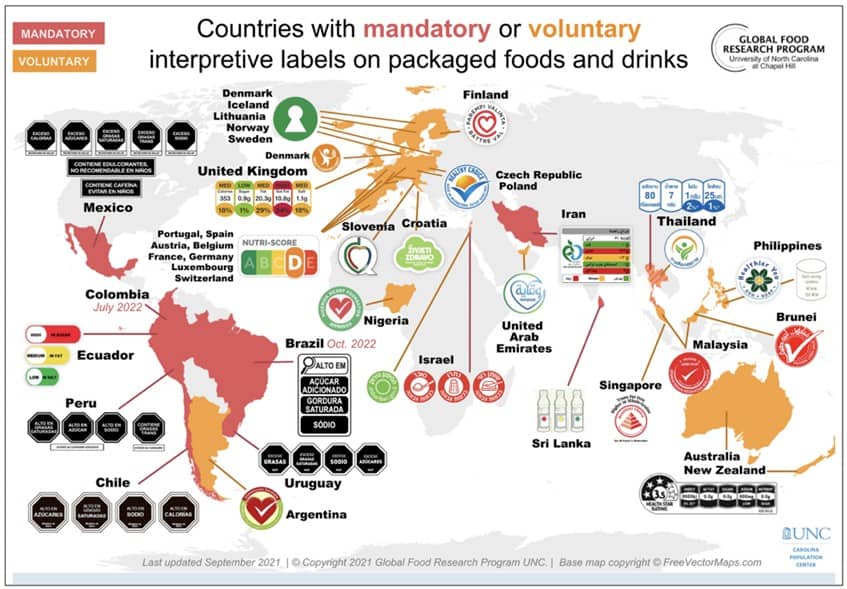
Source: Global food research program
Most Front-of-Pack (FoP) labelling systems consistently exempt alcoholic beverages, special dietary foods (such as infant formula and medical foods), and unprocessed, whole foods like fresh fruits, vegetables, and meat.
All the FoP Labelling systems implemented around the world can be classified as Non-interpretive, Interpretive, and Hybrid.
Non-Interpretive Labels:
Some non-interpretive labels include Reference Intakes and Facts Up Front labels.
- Reference Intake (UK):
Reference Intakes (RI), a voluntary scheme earlier known as Guideline Dietary Amounts, provide consumers with guidelines to determine the approximate amount of nutrients and energy needed for a healthy diet. They show the maximum amount of calories and nutrients a person should consume in a day.
RIs are based on the requirements for an average woman with no special dietary requirements and assume an energy intake of 2000 Calories.
The Nutrient Guidelines are as follows:
- Energy: 8,400 kJ/2,000 kcal
- Total fat: 70g
- Saturates: 20g
- Carbohydrate: 260g
- Total sugars: 90g
- Protein: 50g
- Salt: 6g

Source: Reference Intake EU, Nutritional Labelling UK Guidance
Manufacturers express the Reference Intake value as a percentage (%RI) and represent it per 100g/100ml or per portion.
- Facts Up Front Labels (US):
The Grocery Manufacturers Association and the Food Marketing Institute developed and implemented this voluntary industry initiative in 2011 in response to the FDA’s suggestions to address the use of unauthorized health claims.
The system uses a set of rounded, rectangular icons. It has Basic icons and Optional Icons. Each icon represents quantitative information on the specific nutrients in the food.
It also has an Accompanying statement and a Disclosure statement. Manufacturers use basic icons for calories, saturated fats, sodium, and sugars, and optional icons for dietary fibre, protein, vitamin D, calcium, iron, potassium, vitamin A, and vitamin C. Specifically, they may include optional icons only if the product provides more than 10% of the daily value per serving.
The Accompanying Statement should provide the information on the specific serving size.
Moreover, when using optional icons to highlight positive nutrients, the manufacturer should also indicate high saturated fats, cholesterol, and sodium through the Disclosure Statement.
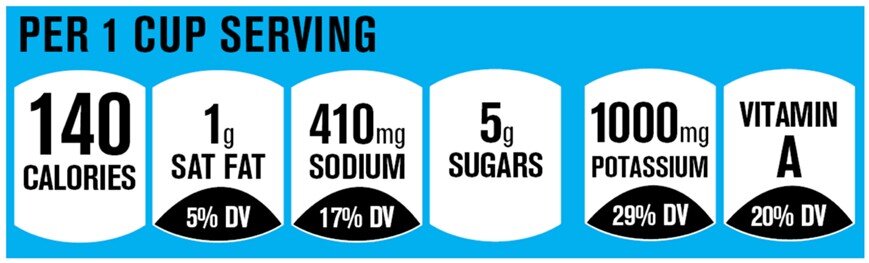
Source: Food Marketing Institute
Interpretive Labels:
Specifically, interpretive FoPL are labelling systems that indicate whether a product is healthy. They use different criteria for foods in each category.
- Nordic Key Hole warning label.
The Nordic Keyhole label is a voluntary Front-of-Pack Nutrition system used in six countries. It sets maximum limits for unhealthy nutrients and minimum criteria for beneficial components like fibre, whole grains, and fruits. These criteria are expressed as g/100g or %.
It does not apply to foods containing sweeteners, plant sterols, or plant stanols. It also excludes foods with over 2% industrial trans fats.
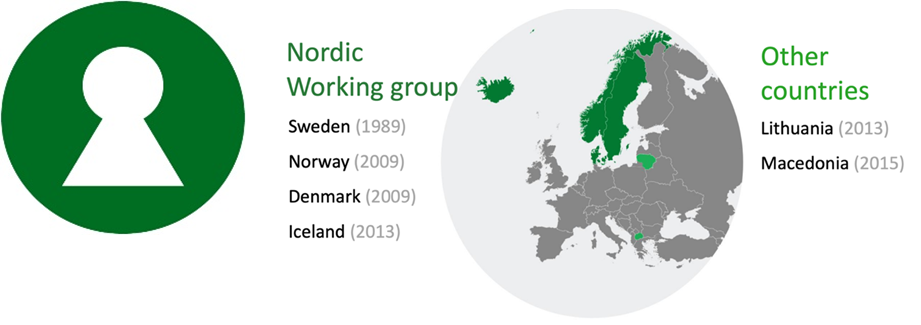
Source: http://food.ec.europa.eu/
There is no criterion specified for proteins, carbohydrates, vitamins and minerals. The Summary of the rule can be found here.
The Nutri-Score system is voluntary, developed by the French public health agency based on Serge Herberg’s work. It is implemented in France, Belgium, Germany, Luxembourg, the Netherlands, Spain and Switzerland.

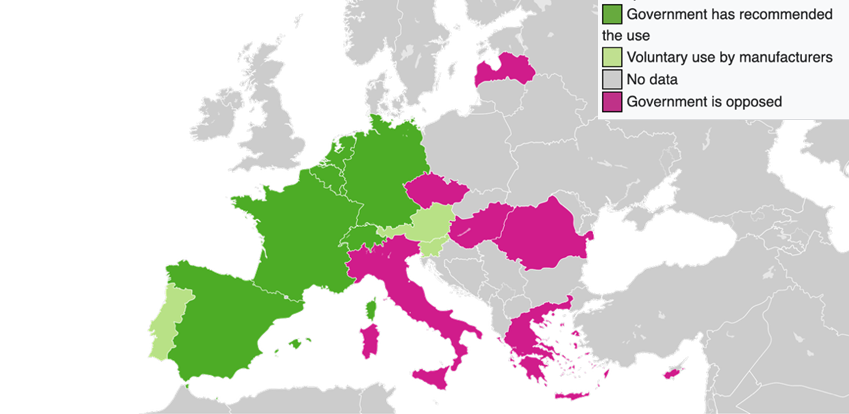
The Nutri-Score system rates the food from A to E. A being the most healthy and E being the least healthy with the colour scale.
Front-of-Pack Nutrition Labelling systems use the updated 2023 Nutri-Score algorithm, which rates foods based on nutritional values per 100g or 100ml. It assigns positive points for fruits, vegetables, pulses, fibre, and protein, and negative points for energy, saturated fats, sugars, salt, and non-nutritive sweeteners. It then subtracts the unfavourable score from the favourable score (N–P) to determine the final rating. Check the Excel tool here by Santé Republique France.
Warning Labels:
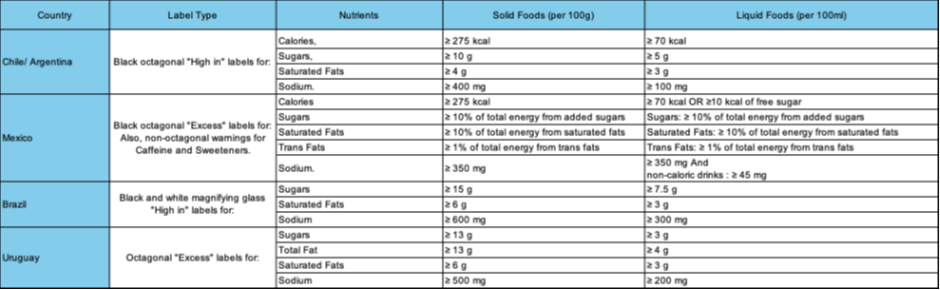
Majorly used in Latin America. This system uses black “HIGH IN” or “EXCESS” warning signs. They highlight foods exceeding nutrients linked to non-communicable diseases.
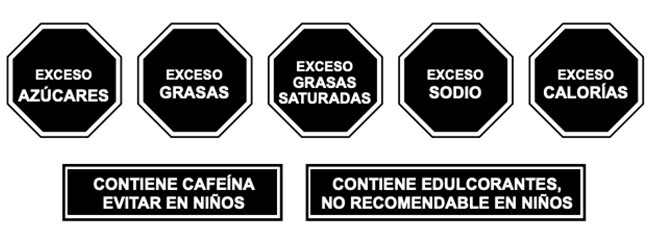
In Argentina, if a product has any one octagonal warning, it cannot be advertised. It also cannot be used in sponsorships.
The warning label was one of the 6 regulatory strategies devised to combat growing obesity by the Pan American Health Organisation (PAHO).
The limits for the individual nutrients were set based on the Nutrient Profile model (PHAO NP). An Expert Consultation Group developed this nutrient profile based on scientific evidence. It supports promoting unprocessed, minimally processed foods and freshly prepared dishes.
Experts devised the PAHO Nutrient Profile using WHO’s Population Nutrient Intake Goals. These goals define average intake for good health.
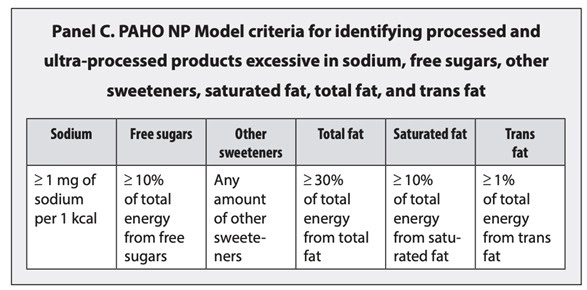
Source: PAHO
Below is the summary for the limits and the type of label that are used in the Latin American countries.
Hybrid Labels:
Hybrid FoPL has both an interpretive component – expressing the level of healthiness as well as a non-interpretive component – expressing a specific nutrient that contributed to the rating; conveying to the consumers the “why” behind the rating. This helps address people with different levels of label understanding, helping them navigate complex food labels.
One of the Major Hybrid system that is implemented is Health Star Rating.
- Health Star Rating(Australia/New Zealand):
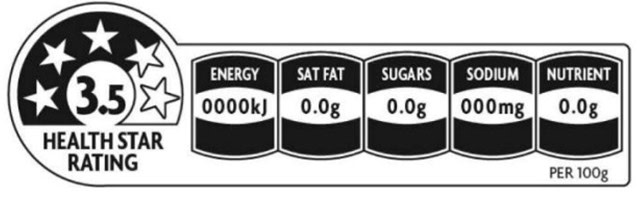
It is a voluntary labelling system implemented in Australia and New Zealand by the joint food regulation organisation – Food Standards Australia New Zealand (FSANZ).
Source: healthstarrating.gov.au
The Health Star Rating system applies to all foods except infant foods, supplementary foods, and alcoholic beverages. Accordingly, it rates products from ½ star to 5 stars, with more stars indicating healthier food.
The Health Star Rating system encourages consumers to compare products only within the same category. For example, compare one yoghurt with another.
The Health Star Rating algorithm awards
- baseline points to the nutritional values for energy (kilojoules), saturated fat, sodium, and total sugar (negative nutrients), and
- Modifying points to per cent of fruit, vegetable, nut, and legume (FVNL) content, protein and dietary fibre (Positive Nutrients).
The system assigns points by food category and calculates the final score by subtracting modifying points from baseline points. The lower the final score, the higher the star rating.
In conclusion, countries worldwide are adopting FoPL systems to help consumers make healthier choices and combat lifestyle diseases. India should move quickly in the same direction and encourage manufacturers to reformulate and produce healthier foods.
However, despite a 2014 expert recommendation, India still lacks a Front-of-Pack Nutrition Labelling (FoPL) regulation. FSSAI plans to submit the FoPL report to the Supreme Court by October 2025. According to a recent report by Mint, FSSAI is planning to mandate warning labels instead of the earlier Health Star Rating plan. Regardless of the delay, Front-of-Pack Nutrition Labelling is long overdue and is what consumers need to make healthier choices.