
INTRODUCTION
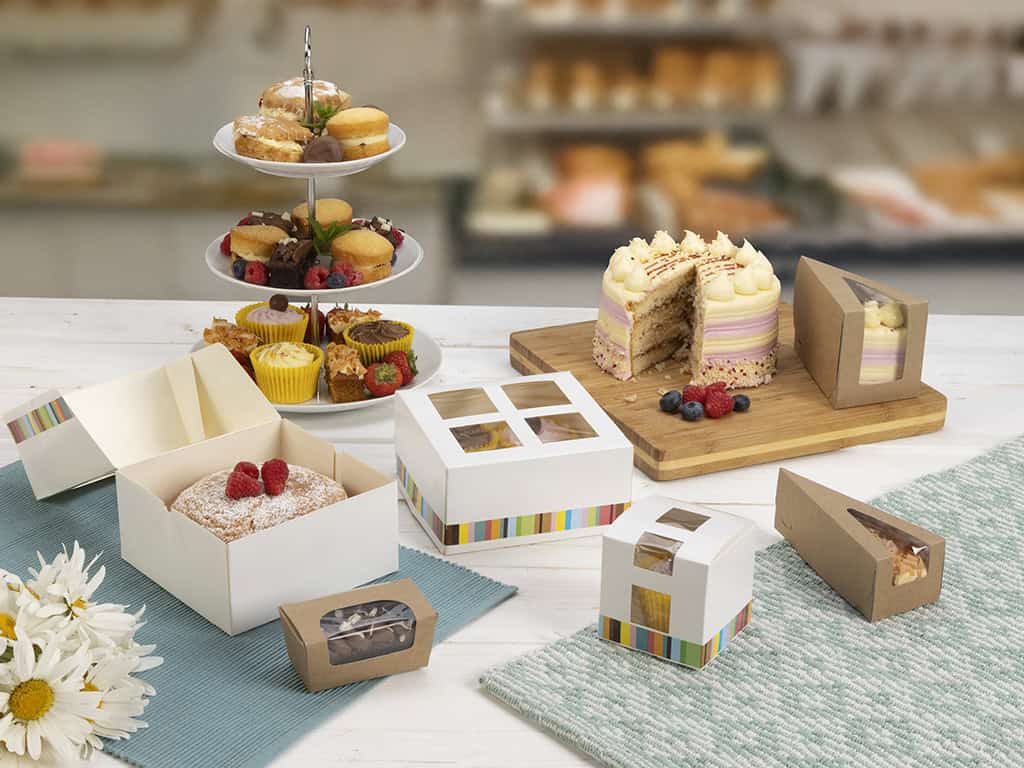
The bakery industry, production of which has been increasing steadily in the country, is the largest among the processed food industries in India. The two major products in the bakery industry are bread and biscuits, which account for around 82% of total bakery production. Other products include pastries, cakes, buns, rusks, etc. With growing demand and diversification, the role of packaging in bakery product quality has become increasingly important to ensure freshness, safety, and consumer satisfaction.
PRODUCT RANGE
Bakery products contain high nutritive value and are manufactured from wheat flour, sugar, baking powder, condensed milk, fat, dry fruits, various essences and flavouring, etc. Different types of bakery products can be classified as
Dry Bakery Products and the Role of Packaging in Product Quality:
Products like biscuits – soft biscuits, hard biscuits, cookies, crackers, fancy biscuits, cream wafer biscuits and more. Biscuits and similar bakery products are fragile in nature and typically characterised by low moisture content (<6%), low water activity, and hygroscopicity. These properties contribute to a longer shelf life but also make the products highly sensitive to moisture ingress.

Shelf-Life Challenges in Bakery Packaging Quality
- Loss of Crispiness: Biscuits are particularly vulnerable to moisture and oxygen exposure. With an initial moisture content of 2–3% (equilibrating to 10–15% RH), crispiness can be lost once moisture content rises beyond 4–6%.
- Rancidity: Due to their high fat content, biscuits are also prone to oxidation when exposed to moisture, air, or light, leading to rancidity, off-flavours, and reduced shelf life.
- Light can also cause colour changes or accelerate fat oxidation. To mitigate these effects, opaque packaging is often used.
The shelf life of biscuits is influenced by multiple factors, including the inherent characteristics of the product, the barrier and functional properties of the packaging material, the packaging techniques employed, and the distribution and storage conditions maintained throughout the supply chain. The role of packaging in bakery product quality is critical in this context, as it directly impacts the product’s freshness, texture, and safety. There is a well-established relationship between water vapour sorption and the chemical, physical, and stability characteristics of biscuits. Therefore, accurate prediction of shelf life and the design of effective packaging solutions require a clear understanding of water sorption isotherms, the water vapour transmission rate (WVTR) of the chosen packaging material, and the specific storage conditions the product will be subjected to.
Critical Packaging Needs
To ensure product quality and shelf stability, biscuit packaging must meet the following requirements, highlighting the critical role of packaging in bakery product quality.
- Low water vapour permeability
- Limited oxygen ingress/egress
- Aroma retention
- Resistance to fat/oil seepage
- Good printability and visual appeal
- Mechanical protection to prevent breakage (e.g., end-fold style packs or gas-flushed pillow packs)
- Freedom from residual solvents, inks, adhesives, and coatings that may cause tainting or off-flavours
- Space for product information (ingredients, nutritional data, price, etc.)
- Serve as an effective marketing tool
A variety of flexible packaging materials are used for biscuit packaging due to their low cost, functionality, lightweight nature, printability, and freight efficiency. These materials are typically used as wrappers, pre-formed pouches, or form-fill-seal packs. Cellophane was one of the earliest materials adopted for its excellent gas barrier and heat sealability, but declined in use due to high cost. Modern alternatives like MST, MSAT, and Coated Cellophane (MXXT) provide excellent moisture barriers, heat sealability, and high gloss. Biaxially Oriented Polypropylene (BOPP or OPP) is now widely used for its strength, clarity, and moisture resistance. These advancements in packaging materials significantly contribute to the role of packaging in bakery product quality, helping to preserve freshness, prevent moisture ingress, and enhance shelf appeal.
Different types of plastic films and their uses are:
| Plastic films | Uses |
| Low-density polyethylene (LDPE) | Performed pouches |
| Polypropylene (PP) | Performed pouches |
| Biaxially Oriented Polypropylene (BOPP) | Plain or pearlised films as overwraps performed pouches, pillow pouches, and pillow pouches on FFS machines |
| Polyester/LDPE laminates | Performed pouches or FFS pillow packs |
| Metallised polyester/poly | FFS pillow packs |
| Paper/Foil/Poly | FFS pillow packs |
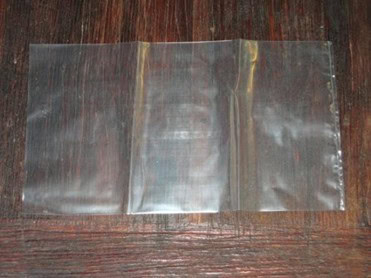
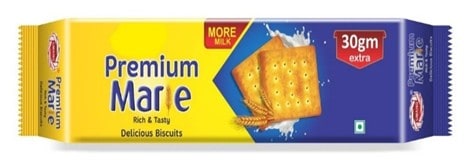
| Simple Polythene Bag | Metallised, cellulose, PP and PE | Printed glossy biscuit packaging pouches | Printed BOPP pouches |
 |  |  |  |
Moist bakery products and the Role of Packaging in Product Quality:
Breads and cakes are bakery products with relatively short shelf lives due to their high moisture content (>12%), soft texture, and moderate to high water activity levels (0.65–0.85). These characteristics make them highly susceptible to oxidation, enzymatic reactions, and microbial spoilage. Since bread typically has a short shelf life, it does not require extensive protection against oxygen. However, the main concerns during storage include moisture loss, staling, and a general loss of freshness. Staling usually begins within 3–4 days of production and occurs due to the migration of water from the starch to the protein components in the crumb, causing the starch to dry out and lose its soft texture. Therefore, the primary function of bread packaging is to preserve product quality until the onset of staling, underscoring the role of packaging in bakery product quality in maintaining freshness and delaying spoilage.

Ideal bread packaging should be attractive, durable, and cost-effective, while providing a sufficient barrier against moisture and maintaining the product’s shape and freshness during handling and transport.

Basic packaging materials
Bread:
Traditionally, bread was packaged in waxed paper wrappers. However, the need for more cost-effective overwrapping materials led to the adoption of polyethylene films. Today, most bread is packed using plastic films such as LDPE, LLDPE-LDPE blends, and polypropylene (PP). For compatibility with auto-bagging machines, high-slip polyethylene resins are preferred, as they offer good openability. Typically, LLDPE/LDPE bags with a thickness of 1–1.5 mm are used, sealed with either plastic clips or twist ties. These packaging choices directly contribute to the role of packaging in bakery product quality, helping to maintain moisture, prevent staling, and extend freshness during storage and distribution.

Cakes, Pastries, Doughnuts:
These high-moisture products are particularly susceptible to mould growth, making it essential to use packaging materials that do not promote microbial activity. Commonly used materials include Polypropylene (PP), Cast Polypropylene (CPP), and Polyvinyl Chloride (PVC), all of which offer good moisture resistance and help maintain product hygiene and shelf life.

Packaging material used for cereal-based food packaging
| Food application | Packaging materials |
| Fresh bread, sandwich | Waxed paperNitrocellulose-coated cellophane (MS)Low-density polyethylene (PE-LD)Polypropylene (PP) |
| Bread bags, sandwich bags, frozen food bags, crusty bread, pies, bread crumbs, biscuits | Linear Low-Density PolyethyleneCellulose/Polyethylene/CellulosePolyethylene/Polypropylene Paper/Polyvinilydene Chloride/PolyethylenePaper/Polyethylene/Polyvinylidene Chloride (PAPP/PE/PVDC)Oriented Polypropylene/ Oriented polypropylene (OPP/OPP)Oriented polypropylene/Paper/Aluminium foil (OPP/PAP/Al)Oriented polypropylene/Aluminium foil/ Hotmelt (OPP/Al/Hotmelt)Coextruded oriented polypropylene/ Coextruded oriented Polypropylene (OPPcoex/OPPcoex)Coextruded oriented polypropylene/ Coextruded metallised oriented polypropylene (OPPcoex/OPPcoexmet) Polyvinylidene chloride coated cellophane (MXXT) |
| Cakes, biscuits, Crisps, snack foods, biscuits | Aluminium foil/PaperPolyvinilydene chloride coated polypropylene/ Polyvinilydene chloride coated polypropylene (PVDC-PP/PVDC-PP) |
| Cereal meals Baked products | Paper/Polyethylene Polyethylene terephthalate /Polyethylene (PET/PE)Polyamide (Nylon)/ Low density polyethylene (PA/PE-LD) |
| MAP – Baked products | Polypropylene/ Ethylene vinyl acetate (PP/EVAC) Metallized polyethylene terephthalate /Polyethylene (PETmet/PE)Polypropylene/Low density polyethylene/Ethylene vinyl Acetate (PP/PE-LD/EVAC) Oriented poly (ethylene terephthalate)/ Polyvinilydene chloride/ Polyethylene- Polyvinyl chloride/Polyethylene (OPET/PVDC/PE-PVC/PE) Oriented metalized poly(ethylene terephthalate)/Polyethylene (OPETmet/PE)Oriented polyethylene terephthalate/ Polyvinilydene chloride/ Polyethylene(OPET/PVDC/PE)Polyamide/ Polyethylene (PA/PE) |
Secondary packaging bakery industry
In the bakery industry, secondary packaging plays a crucial role in ensuring the safe transport, efficient storage, attractive branding, and overall protection of baked goods after they’ve been wrapped in primary packaging (such as plastic film, foil, or baking paper). Unlike primary packaging, which directly contacts the food, secondary packaging is used to group and safeguard multiple units for distribution, retail display, and consumer convenience. This stage of packaging is especially important for delicate items like pastries, cakes, cookies, and muffins, which are prone to damage during handling and logistics. Together, both primary and secondary packaging contribute significantly to the role of packaging in bakery product quality, ensuring that products reach consumers in optimal condition.
Type of Secondary Packaging
Corrugated Fibreboard Cartons (CFC)
Corrugated fibreboard cartons (CFCs) are the most commonly used form of secondary packaging in the baking industry. These cartons are made from fluted corrugated paper sandwiched between two flat linerboards. Their structural strength and versatility make them ideal for transporting baked goods safely and efficiently. CFCs are available in various flute types (A, B, C, E, F), each offering different levels of cushioning and rigidity. For bakery items, B and E flute cartons are popular choices due to their balance of strength and compactness. These properties directly support the role of packaging in bakery product quality, ensuring that products remain protected from physical damage during handling, transport, and storage.

Paperboard Sleeves and Wraps
Thin, foldable paperboard sleeves or wraps are commonly used to encase smaller primary packages or trays, providing an additional branding surface and light protection. While not as protective as corrugated boxes, they are ideal for short-distance transport and in-store stacking.

FOOD CONTACT SURFACES IN THE BAKING UNITS
Silicone Moulds
Silicone moulds are one of the most versatile and widely used food contact surfaces in modern baking. They are made from food-grade silicone elastomers, a synthetic rubber material primarily composed of polydimethylsiloxane (PDMS). These moulds are popular due to their excellent non-stick properties, high flexibility, and resistance to heat, typically up to 230–260°C and are also reusable for multiple baking cycles. Bakers favour silicone moulds for items such as muffins, cupcakes, cakes, candies, mini loaf pans, etc., as they allow easy release of the final product without the need for greasing.

Silicone-Coated Metal Moulds
These are typically made from stainless steel or aluminium and coated with a thin layer of food-grade silicone, combining the thermal efficiency of metal with the non-stick properties of silicone. These are preferred for large-scale baking due to their enhanced structural integrity. They are ideal for applications such as baking large batches of bread, tarts, baguette trays or pastries where both performance and durability are critical. As with standalone silicone moulds, the coatings must remain stable, not flake off, and must not degrade with repeated use. Regular inspections are essential to ensure they remain within safety and quality parameters.

Corrugated Glassine Paper
Glassine is a smooth, glossy paper that’s super-calendared and optionally treated with silicone or wax for resistance to oil and moisture. When corrugated, it is formed into pleats or ridges to fit into Baking trays. Known as baking paper, it is a cellulose-based paper whose material has been processed so as to obtain additional properties such as non-stickiness, grease resistance, resistance to humidity and heat resistance. It is commonly used in baking and cooking as a disposable non-stick paper. It is greaseproof paper that can be used for several different applications; its surface prevents the food from sticking, and also is highly heat-resistant, with some brands capable of temperatures up to 420°F (216 °C). It should not be confused with waxed paper, which is paper that has been coated with wax.
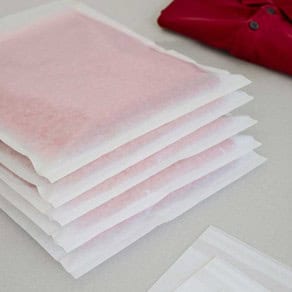
Greased Kraft Paper
A natural, unbleached Kraft paper treated with a layer of food-safe greaseproof agent, such as vegetable oilorwax, to enhance resistance to fats and oils. This type of paper is often used to wrap pastries, line bread pans, or as a rustic baking envelope. While Kraft paper is biodegradable and compostable, its treatment must also comply with food contact regulations, ensuring that the greaseproof layer does not transfer harmful substances to the food during baking.

Paper Cups (For Muffins, Cupcakes, etc.)
Printed paper cups are typically made from virgin pulp-based paper, printed with low-migration,food-grade inks, and may have a thin internal coating of polyethylene (PE), polylactic acid (PLA), or silicone. Externally, they may be printed with branding or product information or for attraction purposes using food-grade inks. The coatings used on the interior side must be food-safe and approved for direct food contact.

REGULATORY REQUIREMENTS
As per the FSS (Packaging) Regulations, food business operators must ensure that all packaging materials comply with Indian standards or relevant international standards where Indian standards are unavailable. Materials in direct or potential contact with food must be of food-grade quality and suitable for the specific product, storage, and transportation conditions.
Packaging must be capable of withstanding mechanical, chemical, and thermal stress, and food products must be packed in clean, tamper-proof containers. Sealing materials should be compatible with both the food and the packaging system. The reuse of tin containers is prohibited, while reusable plastic containers (5L and above) and glass bottles must be durable and easy to clean or disinfect.
Printing inks used on food packaging must conform to IS:15495, and printed surfaces should not come in direct contact with food. The use of newspapers or similar materials for wrapping or storing food is not allowed.
For multilayer packaging, any layer that comes in direct contact with food must meet the requirements specified in Schedules I, II, and III of the FSS (Packaging) Regulations and must not compromise the safety or quality of the food. These regulations reinforce the role of packaging in bakery product quality, ensuring that materials used do not interact negatively with the food or affect its safety and shelf life. Additionally, food business operators must obtain a certificate of conformity from a NABL-accredited laboratory for all food-contact packaging materials.
There are also specific requirements laid out in the regulations for different packaging materials such as paper, plastic, glass, and metal, based on their intended use and interaction with food products. Compliance with these standards is essential to uphold both safety and the overall quality of bakery items.
TESTING OF PACKAGING MATERIALS
Most packaging material tests focus on evaluating various strength parameters to ensure durability. Materials like paper, foil, and film are sold by weight, and any deviation from the standard weight can impact both buyer and seller. Physical properties such as thickness and bursting strength are typically linked to the material’s basis weight. A key function of packaging is to protect its contents during transport and storage; any damage during this stage indicates a failure in packaging performance. These strength and durability factors are directly linked to the role of packaging in bakery product quality, as they help ensure that baked goods remain intact, fresh, and appealing throughout the supply chain.
GSM Test
GSM is one of the most basic tests which stands for Grams per Square Meter, also known as the grammage and it is the weight of 1 square meter of sample. It is applicable to Paper.
Test method:

GSM Tester
A sample of 1oocm2 area (usually a square of 10x10cm or a round of 11.284cm diameter) is cut and weight accurate to 0.01g resolution and multiplied by 100 to give the result in g/m2 or gms.
Dart Impact Resistance
To measure the impact resistance of the plastic film by measuring the load or dart at which 50 % of the specimens fail when tested by this method.
Thickness Tester
Variation in thickness can lead to variation in other mechanical properties such as stiffness, permeability etc. thickness is defined as the perpendicular distance between two principal surfaces of the sample substrate. Applicable to paper, paper boards, films, foils, laminates.
The base of the equipment ensures that the measurements are always taken in an upright orientation and the dead weight on the top of the equipment ensures a uniform and reproducible contact pressure at all times.
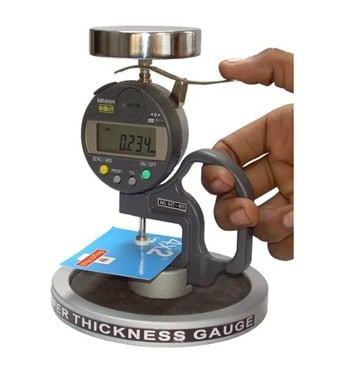
Calliper thickness gauge
A sample is measured in a Dial Type or Digital Thickness Gauge mounted on a vertical stand with a weight (called dead mass) on top. The weight exerts a constant pressure of 50 kPa (100 kPa as per ISO) at the contact surface (point of measurement). This ensures high repeatability in test results. Ordinary screw type micrometers are not to be used as they are highly operator dependent and any amount of excess pressure can compress the specimen and give lower results.
Tear Strength or Tearing Resistance:
Performed on papers and gives an indication towards the strength of it. Also, it is helpful in making the selection of paper-based material for packaging purposes. Tear strength requirement may be high or low according to the use of packaging materials. This test measures the absorbed energy by the sample in propagating a tear by cutting a small nick in it.
Test Method
The Elmendorf tearing tester has two grips set side by side with only a small separation. One grip is stationary and is mounted on an upright on the instrument base. The second grip is movable and is mounted on a pendulum. The pendulum is mounted on a frictionless bearing and swings on a shaft. The sample of 50 x 62 mm size is clamped in the two grips and a cut is made using a sharp knife fixed on the tester. When the pendulum is released, it swings down on pre-cut sample. This indicates the residual energy lost in tearing and expressed in mN (milli Newton).
Water Penetration-Cobb Test
Measures the amount of water absorbed by the sample during penetration from one side to another. Useful in assessing the suitability of paper and paperboards to be used for shipping containers, which are exposed to water spray.
Test Method
A weighed sample is clamped under a metal base plate and exposed to water for one minute (paper/paperboard). The area exposed is 100 cm2. After the specific time, the sample is removed, blotted and reweighed. The difference in weight indicates the amount of water absorbed by the sample. The results are expressed as g / m2.
Pinhole Test
The pinhole tester, popularly known as the light box or light table, is a quality testing machine used to inspect the integrity of aluminium foils, particularly those used in the food industry. The tester emits standardised light that makes pinholes or micro-sized leaks in the foil visible to manufacturers, ensuring delivery of secure and high-quality packaging. Thinner gauges of aluminium foil are more prone to pinholes, which can allow moisture and oxygen to enter the package, accelerating the degradation of contents. The presence of pinholes directly affects the shelf life of products. This testing method, applicable to foils and foil laminates, plays a significant part in upholding the role of packaging in bakery product quality by ensuring barrier effectiveness and product protection.
Test method
A sample of foil or foil laminate is placed on a glass plate with lights under it. This apparatus is also called a light box and usually has a hood on top to cover the sample. Pinholes will be visible as white spots, as light from underneath the sample will pass through the holes while the opaque sample blocks the remaining light. Count the number of pinholes per square meter of sample.
Maximum allowable pinhole count in one square meter of Aluminium foil.
| Foil thickness (µm) | Average | Maximum |
| 7 | 423 | 1584 |
| 9 | 211 | 1056 |
| 13 | 85 | 528 |
| 18 | 21 | 106 |
| 25 | 0 | 0 |
Typical pinhole count in one square foot or one square meter of Aluminium foil.
| Foil thickness (inch) | Foil thickness (µm) | Typical pinhole/ sqft. |
| 0.00025 | 6.35 | 41 |
| 0.00030 | 7.62 | 20 |
| 0.00035 | 8.89 | 12 |
| 0.00050 | 12.7 | 6 |
| 0.00070 | 17.78 | 1 |
| >0.00100 | >25.4 | 0 |
The smallest hole visible with the unaided eye is generally about 10 (µm) in diameter.
Max pinhole count in one square meter of Aluminium foil used in food packaging
| Foil thickness(µm) | Typical pinhole/ sq Mtr. |
| 11 | 60 |
| 14 | 40 |
| 18 | 30 |
| 20 | 20 |
| >25 | 0 |
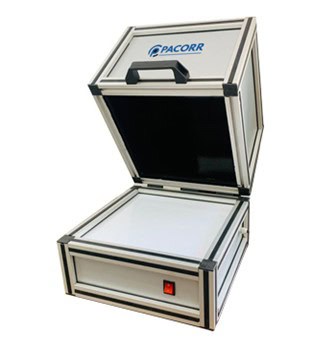
Pinhole Tester
Delamination Test (Peel Bond Test)
Laminates are made by bonding two or more layers of materials. Their performance is often dependent on ability of the laminate to function as a single unit. If the plies have not been properly bond together, the performance may adversely affects.
Applicable to flexible laminates
Test method
PPly separation begins mechanically, by applying heat, or by using a solvent. The separated plies of the test specimen are then placed in the grips of a tensile testing machine. The grips pull apart, and the force required to further separate the plies defines the bond strength. Preparing the sample is the most challenging and time-consuming part of the test. Some laminate layers are so thin that obtaining a proper peel test is rarely possible.

Peel bond tester
Moisture Content
It is necessary to understand the presence of moisture content in paper which affect the other properties of paper such as printing, absorbency etc.
Seal Strength Test (Heat Stability Test)
Seal strength is a quantitative measure used for process validation, process control, and capability assessment. It relates not only to the opening force and package integrity but also indicates the packaging process’s ability to produce consistent seals. A minimum seal strength is essential to ensure package integrity, while in some cases, the seal strength is intentionally limited to allow easy opening. This test is applicable to flexible laminates and formed pouches.
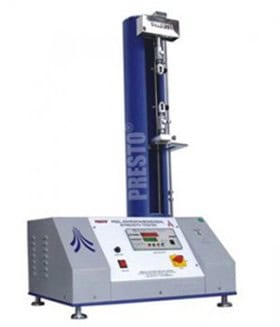
Seal strength tester
Test method
Samples are cut from a formed pouch. Alternatively, laminates can be sealed with controlled temperature, pressure and dwell time to create sample seals. The test specimen is then gripped in a tensile testing machine. The grips are then separated and the force required to separate the seal is defined as seal strength. We can use a lab heat sealer and a tensile tester to create samples using different materials, temperature, pressure and dwell time settings and find the combination offering the best seal strength.
Permeation Test
Packages made with plastics are permeable to small molecules like gases, water vapour, and other low molecular weight compounds such as aroma, flavour, and food additives. Due to the barrier properties of the material, the transfer of these molecules varies from high to low. Understanding the permeation behaviour of polymer films is crucial to determining the optimum shelf life for aromatic foods or foods susceptible to excess moisture or oxygen. This understanding is essential to the role of packaging in bakery product quality, as it helps maintain sensory attributes, prevent spoilage, and ensure consistent product performance throughout its shelf life.
Different films have different barrier properties; hence, laminates are chosen according to the properties of the sample. Permeation tests are generally applicable to plastic films and laminates.
Test method
Samples are mounted in a WVTR/OTR machine, which contains two chambers with different concentrations of water vapor or oxygen. The machine measures the amount of moisture or gas that permeates through the film surface and calculates it as g/m²/day for WVTR and cc/m²/day for OTR. Lower values indicate a higher barrier property.
Determination of Gloss
It is the percentage of reflectance of light at a particular angle where the angle of incident light and the angle of reflected light will be the same. It is an optical property of plastic film.
Test method
Equipment used: Gloss tester, the gloss meter is set up to 450. Take the reading with a plastic film by replacing the standard used for calibrating the instruments, and repeat the test five times with different specimens. It is expressed as specular gloss at 450.
Coefficient of Friction (COF) Test
Flexible packaging typically uses Vertical or Horizontal Form-Fill-Seal (FFS) machines, where rolls of film or laminate come into contact with themselves or with metallic and non-metallic components of the machine. This contact generates friction, which can prevent the material from running smoothly and achieving the desired production speed. Frictional properties are measured by testing the laminate or film as it slides over itself or another surface, usually stainless steel.

COF Tester
The amount of friction required to overcome to initiate motion is called as the Static Coefficient of Friction and the amount of friction required to be overcome to continue the motion is called as the Kinetic Coefficient of friction. COF test is mainly applicable to plastic film and laminates
Test method
A 200 g sled is wrapped with the test specimen and slid over a similar substrate or a stainless-steel surface at a speed of 150 mm/min. The initial and average drag forces (in grams) are recorded and divided by the sled weight (200 g) to calculate the static and kinetic coefficients of friction (COF), respectively.
Ink Rub Test/Scuff Test (Print Quality Test)
Packaging serves as the silent salesman of a product. It must be visually appealing while clearly displaying the product’s technical information. During production, transportation, and distribution, packaging can become scuffed or rubbed. This test simulates standardized rubbing conditions to evaluate the performance of various test specimens. It can also be used to assess the effectiveness of varnishes or other specialized coatings applied to printed surfaces.
This test is applicable to all type of surface printed packaging such as foils, labels, cartons, and even batch coating on pouches. Main limitation of the test is it can be used for testing materials which are in sheet forms only.
PATRA Rub Test/ Sutherland Rub Test
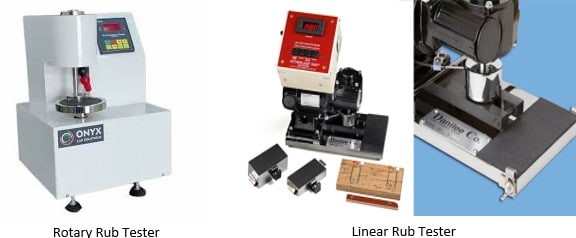
Test method:
There are typically 2 methods of testing
-Rotary Rubbing using 2 circular discs of size 2 and 4.5 inches.
-Linear Rubbing using 2 rectangular samples of specified sizes
Rotary Rub Test
It is more commonly known as the Patra/ Pira Rub test and is the preferred test method for rigid substrates like paperboards. This test cannot be done successfully on thinner and more flexible substrates, which crumple upon rotary rubbing.
The Linear Rub Tester
It is more commonly known as the Sutherland Rub Test and is an all-rounder test since it can be used on all thin or thick specimens.
Pouch Compression Test (Load Burst Test)
This method, commonly known as the Sutherland Rub Test, is a versatile procedure suitable for both thin and thick specimens.
When a shipper carton fails, stacking loads can be transmitted onto to package. Hence, a flexible or semi-flexible package (such as a pouch or blister pack) should have the ability to withstand small amounts of loads for short periods of time. This test is applicable to flexible pouches and blister packs. We can only apply to gas or liquid-filled packs, or those that can be filled with water for testing. Cannot be directly used for testing pouches filled with powder or solid products.
Test method
There are 2 basic methods of test
–static compression test, where a package is loaded up to a predetermined level, held there for a predetermined time period and then relaxed.
– dynamic compression test, where a package is loaded incrementally till it cannot bear the load any longer and eventually bursts open.
Static Compression Test
Place a sealed package, filled with its original contents or water in a compression machine. Load the sample with force as per the table below and hold it for 60 seconds. Remove and check for leakages and seal integrity.
The above test method is prescribed by JETRO (Japan External Trade Organisation) in “Specification, Standards and Test Methods for Food Stuffs, Implements, Containers and Packaging, Toys, Detergents 2008” published in January 2009.
Dynamic Compression Test
Place sealed package, filled with its original contents or water in a compression machine. Load the sample with increasing force till the seals rupture and the contents come out. Pouches should be strong enough to withstand the forces that will be subjected to then in the event of its outer package (shipper) failure. The higher Dynamic Compression Strength means the better quality of the pouches.
Pouch Burst Test (Internal Burst Test)
The principle is similar to a pouch compression tester, except that the pouches here are subjected to internal air pressure. The internal burst test is used as a good overall test for a hermetic seal, including an indication of correct heat-sealing conditions and a measure of the ability of a package to withstand transportation and handling. It is applicable to flexible pouches and blister packs. This test is performed on empty packs only and cannot be performed on product-filled packs.
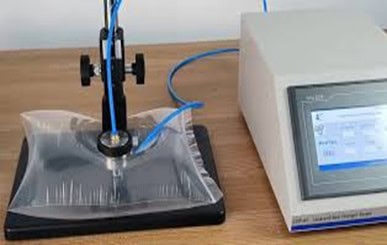
Pouch Burst Tester
Test method
The sample is mounted in a burst test, which internally and increasingly pressurises a package until an area of the package seal around the perimeter “bursts” open in response to pressurisation. Visually examine the tested package and note the position and type of failure, as well as the pressure at which the failure occurred. If the seals open, then the weakest seal. If the laminate ruptures, note the result as a laminate failure.
Vacuum Leakage Test
Package integrity is an important characteristic of package performance. Breaches of package integrity may permit substances to enter or contents to escape packages. A leak means an opening in a flexible package that, contrary to intention, either lets contents escape or permits substances to enter. It is applicable to any non-porous package such as Pouches, Blister Packs, Cans, Bottles, etc. This test can also help understand the performance of a package when transported through non-pressurised air cargo or when it is used at high altitudes (low atmospheric pressure). It only detects leaks due to reasonably large pinholes or gaps, which can allow the fluid or gas to pass out and or water to enter the package. This test is not suitable for detecting micro leakages or testing packages containing high viscosity fluids. This test also cannot be used to test vacuum-sealed packs.
Test Method
Dry test, in which the package is filled with the actual liquid product or, more preferably, coloured water (because the water viscosity is usually lower than the actual product). A white tissue paper or similar is kept in a Vacuum Desiccator Tank, and the package is kept on it. Bottles have to be kept inverted. The tank is then closed, and a gradually increasing vacuum is applied to the tank up to a predetermined level. The vacuum is then held at the level for a predetermined time period and then released. If there is any leakage in the pouch, the product (or coloured water) would have come out and stained the tissue paper under it. In case of the bottle, the bottle is kept vertical and tapped slightly from the cap. The cap is then removed to see if any product is visible on the lip of the bottle or the threads of the cap.
Wet test, in which the package either contains that is essentially solid or powder and has a considerable amount of air in the headspace. The Vacuum Desiccator Tank is filled with water (coloured water), and the package is dipped in the water. A suitable method is to restrain the package and keep it dipped in water throughout the test. The tank is then closed, and a gradually increasing vacuum is applied to the tank up to a predetermined level. The vacuum is then held at that level for a predetermined time period during which leaks can be identified as visible streams of air bubbles. After the preset time, the vacuum is released. If constant air bubbles are seen, the leak is confirmed.
Head Space Analysis (O2 measurement)
Modified Atmospheric packaging (MAP) is now commonly used to enhance the shelf life of food products that are sensitive to the presence of oxygen. The process of MAP is flushing of nitrogen or other gas mixes to displace the air inside the package.
Sometimes the flushing has been done incorrectly or inadequately, thereby allowing an undesirable amount of oxygen to remain inside the package to reduce the shelf life or stability of the product.
Test method
A septum seal sticker is applied to the package (pouch/ blister/ tetra pack/ bottle, etc. and a needle is pushed through it. The gas inside is allowed to come out through the needle and is analysed by an oxygen (or other gas) sensor. The instrument shows the oxygen percentage directly.
Ambient air has 20.9% oxygen. MAP targets to flush out this air and bring down the oxygen level to under 1.5%. The presence of oxygen in excess air of 2% can have a degrading effect on product stability and shelf life.
Flex Crack Resistance (FCR)
Flex Crack Resistance tests how brittle flexible packaging is. This flexible packaging testing method checks how much the packaging can be flexed or bent before it cracks.
Haze
The haze of the specimen is the percentage of transmitted light which is passing through the specimen, deviated from the incident beam by forward scattering. This is also an optical property of the film.
NEW PACKAGING TECHNIQUES FOR BAKERY PRODUCTS
Modified Atmospheric Packaging (MAP)
Modified Atmosphere Packaging (MAP) is especially suited to breads, pastries, and pies. CO₂ and N₂ are the most commonly used gases in the gas packaging of bakery products. Carbon dioxide is soluble in water and fat, forming carbonic acid and thereby lowering the pH of the product, which helps inhibit microbial growth. Nitrogen is only effective in environments with low oxygen concentrations. Mould growth can be effectively controlled through MAP; however, the antimicrobial effect may be lost if the headspace oxygen concentration increases even slightly (as little as 0.5–1%). The use of MAP illustrates the critical role of packaging in bakery product quality, helping to extend shelf life, maintain freshness, and ensure product safety..
| Food | Gas mixture | Storage temperature | Shelf life | ||
| CO2 | N2 | MAP | In air | ||
| Fresh pasta | 50 | 50 | to 5 | 3-4 weeks | 1-2 weeks |
| Bakery products | 50 | 50 | 0 to 5 | 4-12 weeks | 4 – 14 days |
| Pies | 50-70 | 30-50 | to 6 | 2-3 weeks | 3-5 days |
| Cakes | 20-40 | 60-80 | 20 to 25 | Even one year | Some weeks |
| Rye wheat bread | 20-40 | 60-80 | 20 to 25 | 2 weeks | Some days |
| Pre-baked bread | 80-100 | 0-20 | 20 to 25 | 20 days | 5 days |
Map the gas mixture of bakery products
Packaging materials used for atmospheric (air), modified atmosphere (MAP) and active packaging of bakery products:
| Bakery products | Packaging material (Thickness) | Gas permeability (cm3/m2.day.atm)WVP (g/ m2.day) | Packaging conditions |
| Bread | Laminate with EVAL | CO2 = 2.3 O2 = 0.45 | |
| Bread | PE | Air+Ca-propionate | |
| Wheat bread | Laminate with EVAL (95µm) | O2<2 CO2<2.3 WVP<1 | Air; 100 CO2; 50% CO2+ 50% N2 |
| White bread | PP film | AP:O2absorbent | |
| White bread | PE | AP:O2-absorbers+ K-sorbate | |
| Soy bread | PVDC/PET/PVDC | 20% CO2+80% N2 | |
| Soy bread | PE-LLD/PA/EVAL/PA/ PE-LLD | MAP: 50/50; 20/80 CO2/N2+Ca-propionate | |
| Bread slices | CryovacR BB4L bag (60µm) | O2=35 CO2=150 WVP=20 | Air-, Different MAP+/− Ca-propionate Different MAP+ |
| Wheat and Rye bread | OPP/(PE LD/EVAL-PE-LD) (70µm) PA/EVAL/PE (160µm) PA/EVAL/PE (160µm) | O2=3 WVP=1 O2=2 WVP=7 O2=3 WVP=1.5 | AP:O2-absorbers AP: mustard oil AP: mustard oil + different MAP 80% CO2+1%O2+AP: mustard oil in 96% ethanol; Air |
| Pre-baked buns | PE-LD (80µm) | AP: ethanol emitters | |
| High moisture/pH bakery Products | High-gas barrier bags (CryovacR) VF 52 metallised bag O2=0 | O2=4 O2=0 | AP: water-ethanol and mastic oil-ethanol emitters |
| Meal ready – to-eat bread | PET/Al/PE | AP:O2-absorbers | |
| Sponge cake | OPP/(PE LD/EVAL/PE-LD)/PE LLD (95µm) | O2=2 WVP=1 | Different MAP |
| Sponge cake | PA/PE (90µm) | O2=19.9 CO2=164.9 WVP=2.6 | Air; Different MAP+/− O2-absorbers |
| Pre-baked pizza dough | BicorTM MB777 (21µm) | Air; Different MAP+/− Ca-propionate | |
| Fresh lasagna pasta | PVDC/PE (80µm) | O2=8.63 | AP:O2-absorbers |
Vacuum Packaging
This involves evacuating most of the oxygen present in the package to levels than 1% (vol/vol). Low oxygen concentration prevents aerobic organisms and reduces the rate of oxidative rancidity.
Flushing with Inert Gas
Nitrogen is used as a filler gas; it can delay the oxidative rancidity in low water activity products. Also, it produces uniform pillow packs that prevent damage to the fragile products during handling and distribution.
Gas Packaging
This is an extension of vacuum packaging technology, which includes packaging of a product in an impermeable film, flushing with appropriate gas mixtures, and then heat sealing the package. Carbon dioxide and nitrogen gases are mostly used.
Active Packaging
It improves the shelf life of the foods by modifying the environment around the food so that the growth of microorganisms is prevented or delayed. The shelf life of a product can be extended using oxygen absorbers. The absorbers generate carbon dioxide, replacing the removed oxygen.
PACKAGING STYLE
There are several popular wrapping styles, which are applied widely to a variety of biscuits (of all shapes and sizes). Biscuits packed using the following two wrapping styles must be of a common size and shape, with a certain consistency and rather narrow tolerances in their dimensions. Standard wrapping machines can be used.
End-fold Wrapping:
Traditional biscuit wrapping style. A portion of biscuits standing on edge is roll–wrapped or fold-wrapped into a heat-sealable film. The longitudinal packet seal is sealed tightly in a fin seal style. The packet ends are folded neatly and heat-sealed. Due to the neat and tight surroundings of the film, this packet gives utmost mechanical protection and acceptable barrier properties for hard and semi-hard biscuits and many other cracker types.
Pillow Pack Wrapping:
Used mainly in small packets (single serve packets) containing one or more piles of biscuits. The main advantage of pillow packs on edge is their flexibility with regard to the slug length. For instance, it allows the machine to automatically adjust the length during wrapping by means of tenderness-controlled check weighers. This feature ensures the highest weight accuracy. Additionally, the pillow packs’ typical fin seal style sealing is somewhat tighter than the enfold wrap.
Packing for Odd-sized Biscuits:
Besides enfold wrapping and pillow pack wrapping, which by the way cover about 85-90% of all biscuit products, there are some speciality biscuits with their own unique wrapping needs. These include an assortment of small cocktail crackers filled in bags by vertical FFS machines and cookies of uneven sizes whose tolerance does not allow a standard wrapping. The latter are automatically or manually loaded into decorated trays and subsequently over-wrapped on pillow pack machines.
PRINTING INKS
Printing inks for films and papers consist of dyes dispersed in a blend of solvents and resin, which forms a varnish. Inks may also contain extenders, plasticisers, and slip agents. Solvents must be carefully removed to prevent odour contamination of the food. Proper ink formulation and application are essential to maintaining the role of packaging in bakery product quality, as any migration or residual odour can compromise the safety, aroma, and overall appeal of the product.
Three processes are used to print films and papers:
- Flexographic printing in up to eight colours is high speed and suitable for lines and blocks. Fast-drying inks are applied to the film using a flexible rubber plate with raised characters.
- Photogravure printing is able to produce high definition detail and realistic pictures, and more recently, with holograms. In this case, a chromium plate is acid-etched, and the ink is transferred to the packaging in an analogous way to how bank notes and stamps are printed.
- Offset lithographing relies on the repulsion between oil and water. A greasy ink is repelled by water previously applied to the surface. Cans are still lithographed in this way and make labels superfluous.
Food Grade Inks
Food-grade inks (or food-safe inks) are dyes and inks that are safe for printing on food packages. This means that even if the inks penetrate your food, they don’t contaminate it. In other words, food-grade inks are edible inks that inkjet printers use for printing on food packages. Food-safe inks have proper surface tension for imprinting, fast drying time, smear resistance, and suitable viscosity. They contain safe chemicals for human consumption and meet specific regulatory guidelines. The purpose of food-grade ink is to ensure that food is free from toxins, harmful metals, and dangerous chemicals. These properties directly support the role of packaging in bakery product quality by maintaining product safety, preventing contamination, and ensuring regulatory compliance.
Glycerin is one of the primary ingredients in food-grade ink and acts as a cosolvent. Edible inks also contain water, traces of food-grade dye, and food glycerol. These inks must also undergo a hygiene manufacturing process to avoid contamination with non-food-grade substances.
Packaging ink can infiltrate food items through ink migration. Ink migration refers to situations where ink substances transfer from the packaging material into the food. Apart from contaminating food, ink migration can change its flavour and odour. It will also endanger the customer’s health and destroy the brand reputation.
These are the most common food-grade packaging inks for various types of edible products:
Water-Based Inks
Water-based inks use water as the primary solvent. They are widely appreciated for their environmental friendliness and safety, particularly in indirect food contact applications. They are low in volatile organic compounds (VOCs), safe for printing on the exterior of food packaging and also cost-effective and suitable for porous materials. Mainly used in paper and cardboard packaging, labels and corrugated boxes, cartons and wrappers, etc. Less effective on non-porous substrates (e.g., plastic films) and slower drying time compared to solvent-based inks
Solvent-Based Inks
These inks use food-safe organic solvents such as ethanol, isopropanol, or ethyl acetate. They are formulated for excellent adhesion and fast drying. It is good for high-speed printing on flexible plastics and is designed to leave minimal residual solvents
Commonly used in Plastic packaging films (snack packs, frozen foods), gravure and flexographic printing, and in film printing (BOPP, PET, PE). It must pass solvent residual tests such as headspace GC-MS.
UV-Curable Low Migration Inks
UV-curable inks are hardened using UV light, and low migration variants are specifically engineered to prevent ink components from leaching into food. It is instantly cured, hence no solvent is needed. Typically used in Labels, shrink sleeves, laminated pouches, beverage bottles and jars.
Electron Beam (EB) Cured Inks
EB inks are similar to UV inks but are cured using electron beams instead of UV light, which eliminates the need for photoinitiators—a key source of migration concerns. It is solvent-free, photoinitiator-free. Mainly used in laminated flexible packaging, dairy and confectionery packs.
Edible Inks (Direct Food Contact)
Used directly on food (cakes, capsules, fruits), these inks are made from food-grade dyes, glycerine, ethanol, and other safe ingredients. It is completely indigestible. Mainly used in cake decorations, pharmaceuticals and confectioneries.
Soy-Based and Vegetable-Based Inks
Eco-friendly inks are made from renewable oils like soybean oil. Suitable for indirect food contact with proper formulation. Suitable for paper food wrappings.
| Ink Type | Main Use | Substrate | Food Contact | Curing/Drying |
| Water-Based | Cartons, paper | Porous | Indirect | Air/heat dry |
| Solvent-Based | Flexible films | Non-porous | Indirect | Fast (evaporative) |
| UV Low Migration | Labels, films | Non-porous | Indirect | UV light |
| EB Cured | High-barrier flexible packaging | Films, laminates | Indirect | Electron beam |
| Edible Inks | Printed directly on food | Food items | Direct | Quick dry |
| Soy-Based | Paper packaging | Porous | Indirect | Slow air dry |
Food Grade Solvents
Solvents that are approved for use in food processing or packaging. They are non-toxic, non-carcinogenic, and safe for consumption in trace amounts.
Common Examples:
- Ethanol
- Isopropyl alcohol (limited use, and must meet purity standards)
- Vegetable oils(used in natural extractions)
- Water
There are some Solvents prohibited for use in food or food packagingdue to theirtoxicity, environmental impact, or migration potential.
Common Banned or Restricted Solvents:
| Solvent | Risk | Reason for Ban |
| Benzene | Carcinogenic | Causes leukaemia, banned globally |
| Toluene | Neurotoxic, reproductive harm | High migration risk in packaging |
| Xylene | Irritant, toxic | Banned or restricted in many countries |
| Carbon Tetrachloride | Liver toxicity, carcinogenic | Prohibited in all food applications |
Headspace Analysis (for Solvent Detection)
A technique used in analytical chemistry to detect volatile compounds (like solvents) in a sample, especially packaging materials.
Method:
A sample is placed in a sealed vial. It is heated to allow volatile compounds to evaporate. The gas (headspace) above the sample is collected and analysed, typically by GC-MS (Gas Chromatography-Mass Spectrometry).
It is mainly used for checking residual solvents in packaging films, ensuring compliance with migration limits and detecting off-odours or contamination.
Flask Test (for Odour Detection)
It is a sensory evaluation method used to detect odours from packaging materials, often caused by residual solvents. It detects off-odours that may affect food quality and verifies that materials do not emit unacceptable odours due to residual chemicals
Method:
The packaging sample is placed in a sealed flask or container. It is left for a defined time under specific conditions (e.g., 40°C for 24 hours). The headspace is then smelled by trained panellists.
General Labelling Requirements:
The general labelling requirements of a product are:
- the name of the food
- list of ingredients
- Additives and declarations
- nutritional information panel
- Veg/ non-veg logos
- date marking and storage instructions
- net quantity
- maximum retail sale price and unit sale price
- name and address
- the country of origin
- batch/lot identification
- instructions for use and special storage requirements
- allergen information
Specific Labelling Requirements:
The additional requirements for bread labelling are based on FSSAI’s Labelling and Display Regulations, which specify:
- Minimum percentage thresholds of key ingredients required to label a product as a particular type of bread (e.g., multigrain, whole wheat, milk bread, etc.).
- These percentages are calculated based on the total flour used in the formulation.
- For example:
- “Whole Wheat Bread” must contain at least 75% whole wheat flour.
- “Milk Bread” must contain at least 6% milk solids.
- “Multigrain Bread” must have ≥20% permitted grains (or 10% in the first year).
This ensures that the name of the bread reflects its actual composition, preventing misleading labelling and reflecting the role of packaging in bakery product quality, as it helps ensure transparency, regulatory compliance, and informed consumer choice.
CONCLUSION
Bakery products include items with different packaging requirements, which are met by a range of plastic materials in the form of films, laminates, and thermoformed trays. These materials provide adequate protection against moisture loss or gain, retain taste and aroma, and are hygienic and safe for food contact. The role of packaging in bakery product quality is clearly reflected in the ability of these materials to preserve freshness and prevent spoilage. Additional properties such as machinability, printability, and cost-effectiveness further make them the ideal choice for bakery packaging solutions.
REFERENCES
- Beyer, R. “Manual on Food Packaging for Small and Medium-Size Enterprises in Samoa.” Food and Agriculture Organisation of the United Nations Sub-Regional Office for the Pacific Islands: Apia, Samoa (2012).
- Food Safety and Standards (Packaging) Regulations, 2018(Version-IV (09.09.2022))
- Jayan, Heera, J. A. Moses, and C. Anandharamakrishnan. “Testing methods for packaging materials.” Bio-based Materials for Food Packaging: Green and Sustainable Advanced Packaging Materials (2018): 57-79.
- https://www.bizongo.com/blog/flexible-packaging-testing-methods
- https://www.slideshare.net/slideshow/food-packaging-testing-equipment-75608077/75608077
- https://www.slideshare.net/slideshow/yadav-ppt/26682316
- Packaging of bakery products
- Robertson, G.L. 1993. Food Packaging Principles and Practice. Marcel Dekker, INC. New York, USA
- San, Horman, et al. “Functional polymer and packaging technology for bakery products.” Polymers 14.18 (2022): 3793.
Author: Dr Shashikant Kunigal, Principal Consultant, Food Safety Works. Dr Kunigal has a PHD in food microbiology from CFTRI, Mysore. He has close to 40 years of experience, including Head of Corporate Quality, Britannia, Hienz, and CII.
Compilation done by: Ms Shamina, Spice and Bakes.