
The food industry is constantly evolving, and so are the standards that guide food safety management. FSSC 22000 has been at the forefront of providing a globally recognized certification scheme, helping organizations implement robust food safety systems. The upcoming FSSC 22000 Version 7 represents a significant step forward, with updates designed to strengthen food safety practices, improve clarity, and support sustainability efforts across the food chain.
Why Version 7 Was Needed
Several factors drove the development of Version 7. First, the ISO 22002-x:2025 series on prerequisite programs (PRPs) has been updated, requiring the Scheme to integrate these changes. PRPs form the foundation of any food safety management system, and aligning with the latest standards ensures organizations maintain robust controls across their operations.
Second, the Scheme needed to align with the GFSI Benchmarking Requirements v2024, which sets the global standard for food safety certifications. This alignment ensures that certifications under FSSC 22000 are recognized internationally, making it easier for organizations to meet global supply chain expectations.
Finally, there was a clear need to support organizations in contributing to the Sustainable Development Goals (SDGs). Version 7 introduces strengthened requirements that encourage responsible practices in sourcing, environmental stewardship, and social responsibility—all while maintaining high food safety standards.
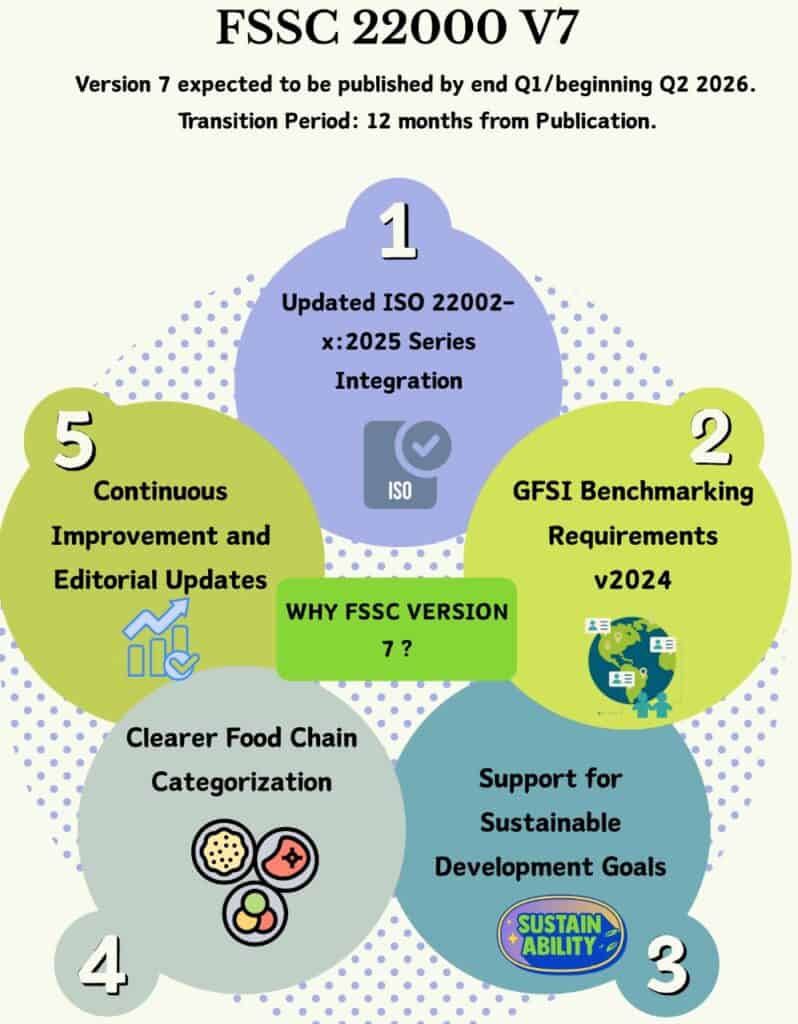
Key Updates in Version 7
Version 7 brings several important updates, designed to make food safety management more practical, clear, and globally aligned:
- Updated ISO 22002-x:2025 Series Integration
The new ISO 22002-x series offers updated guidance on prerequisite programs essential for controlling food safety hazards at the operational level. By integrating these updates, Version 7 ensures organizations apply a modern, science-based approach to hygiene, contamination prevention, and risk management. - Alignment with GFSI Benchmarking Requirements v2024
Global Food Safety Initiative (GFSI) recognition is essential for organizations seeking international market access. Version 7 aligns the FSSC 22000 Scheme with the 2024 Benchmarking Requirements, ensuring that certifications remain relevant and accepted across the global food supply chain. This alignment benefits organizations by providing consistency and credibility in their food safety management systems. - Support for Sustainable Development Goals
Sustainability is no longer optional in food production. Version 7 introduces enhanced guidance to help organizations actively contribute to SDGs, including responsible sourcing, reduced environmental impact, and improved social responsibility. These updates reflect the growing importance of sustainability in the food industry and the role food safety systems play in supporting it. - Clearer Food Chain Categorization
Version 7 provides a more defined structure for food chain categories, helping organizations easily identify which requirements apply to them. This clarity reduces confusion, ensures better compliance, and allows for more targeted implementation of food safety controls. - Continuous Improvement and Editorial Updates
As part of ongoing improvement, Version 7 incorporates editorial changes and refinements throughout the Scheme. These updates enhance clarity, readability, and usability, making it easier for organizations to implement the requirements effectively.
Publication Timeline and Transition
The exact release date for Version 7 is not yet confirmed, but it is expected around the end of Q1 or the beginning of Q2 2026. Once published, organizations and Certification Bodies will be provided a 12-month transition period to implement the new requirements. This allows organizations sufficient time to update their food safety management systems and align operations with Version 7 while continuing to meet business objectives.
Continuation of Version 6
Until Version 7 is released, FSSC 22000 Version 6 remains valid. Version 6 continues to reference the existing ISO/TS 22002-X series, which are still available for purchase from National Standards Bodies. Organizations can continue operating under Version 6 while preparing for the transition to the updated Scheme.
Why Version 7 Matters for Food Businesses
Version 7 is more than just an update; it reflects a forward-looking approach to food safety. By adopting Version 7, organizations can:
- Strengthen Food Safety Systems: The integration of updated PRPs and clearer requirements helps prevent contamination and ensures operational consistency.
- Enhance Global Recognition: Alignment with GFSI Benchmarking Requirements makes certifications widely recognized, supporting international market access.
- Support Sustainability Goals: Organizations can better contribute to SDGs, demonstrating commitment to environmental, social, and economic responsibility.
- Simplify Compliance: Clearer food chain categorization and editorial improvements reduce ambiguity, making it easier for organizations to implement and maintain compliance.
- Stay Future-Ready: The continuous improvement approach ensures that the Scheme evolves with changing industry expectations, technology, and regulatory requirements.
Preparing for the Transition
Organizations are encouraged to start familiarizing themselves with the updates in Version 7 even before its official release. Understanding the changes in PRPs, SDG-related requirements, and food chain categorization will help businesses plan for smooth implementation. Early preparation helps use the 12-month transition period effectively and prevents disruptions to certification or operations.
Conclusion
FSSC 22000 Version 7 represents a significant evolution in food safety management. With updated PRPs, GFSI alignment, enhanced sustainability support, and improved clarity, Version 7 helps organizations run safer, more responsible, and globally recognized food systems.
Although Version 6 is still in effect, organizations should start preparing for Version 7 to stay ahead, maintain compliance, and support a safer, more sustainable food industry.