

Audits in the food industry serve as essential checkpoints that ensure food safety, compliance, and quality. Moreover, they help you identify gaps in the system and build a stronger, more robust setup. In addition, audits verify whether a company follows required standards, such as those set by FSSAI or food safety management systems, and ultimately strengthen consumer trust.
What is an Audit – Food Industry?
An audit is a systematic review that verifies whether food safety practices and processes are effective. Furthermore, it helps check whether daily operations and systems align with documented procedures, regulatory requirements, and food safety standards.
- Independent and documented examination of food safety systems.
- Ensures hazards are controlled and hygiene practices are followed.
- Verifying compliance with regulatory requirements or standards like FSSAI, HACCP, ISO 22000, FSSC 22000 and others.
Why Are Food Safety Audits Done?
Audits serve multiple purposes in food manufacturing, processing, and distribution. They not only help in compliance but also drive continual improvement in operations.
- Meet statutory and regulatory requirements (e.g., FSSAI, Schedule 4).
- Detect risks before they turn into recalls or incidents.
- Build customer and consumer confidence in safe, quality products.
- Strengthen systems through regular review and corrective actions.
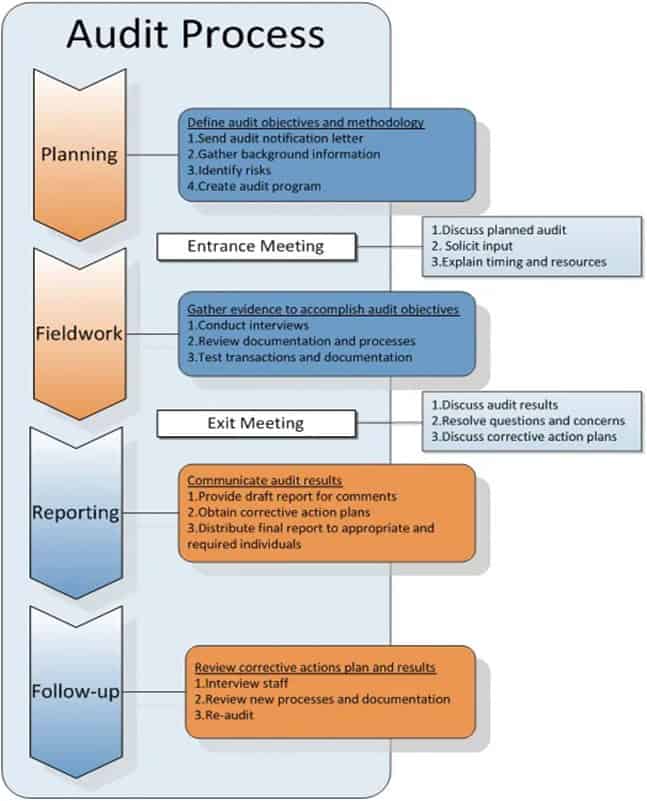
Audit Process Flow
The audit process in the food industry generally follows a structured path.
Types of Audits for Food Industry
1. First-Party Audit (Internal Audit)
The company conducts internal audits as self-assessments. These audits ensure the team follows documented processes and help identify improvement areas before external scrutiny.
- Conducted by cross functional departmental / internal food safety team.
- Verify compliance with FSSAI, SOPs, and HACCP plans.
- Prepare the facility for regulatory or certification audits.
- Continual Improvement
Example: Monthly internal hygiene and GMP audit.
2. Second-Party Audit (Supplier/Customer Audit)
Second-party audits are performed by customers or brand owners to evaluate suppliers. They are a critical step in maintaining supply chain safety and quality.
- Conducted by customers, retailers, or external auditors on their behalf.
- Assess suppliers against food safety requirements.
- Ensure consistency and reliability of raw materials.
Example: Auditing suppliers for compliance based on their requirements.
3. Third-Party Audit (Independent or Certification Audit)
Third-party audits provide independent verification of compliance. These are carried out by certification bodies or regulators and often result in certifications or approvals.
- Conducted by accredited certification bodies or TPA recognized by FSSAI.
- Check adherence to global food safety standards or regulatory requirements.
- Provide unbiased credibility and build customer trust.
Example: ISO 22000/FSSC 22000 certification audit or FSSAI’s mandatory Food Safety Audit.
Conclusion
In the food industry, audits are more than compliance exercises — they are proactive tools for risk control, continuous improvement, and consumer protection. Whether internal, supplier-based, or independent, every audit adds value and strengthens the safety culture within an organisation.