
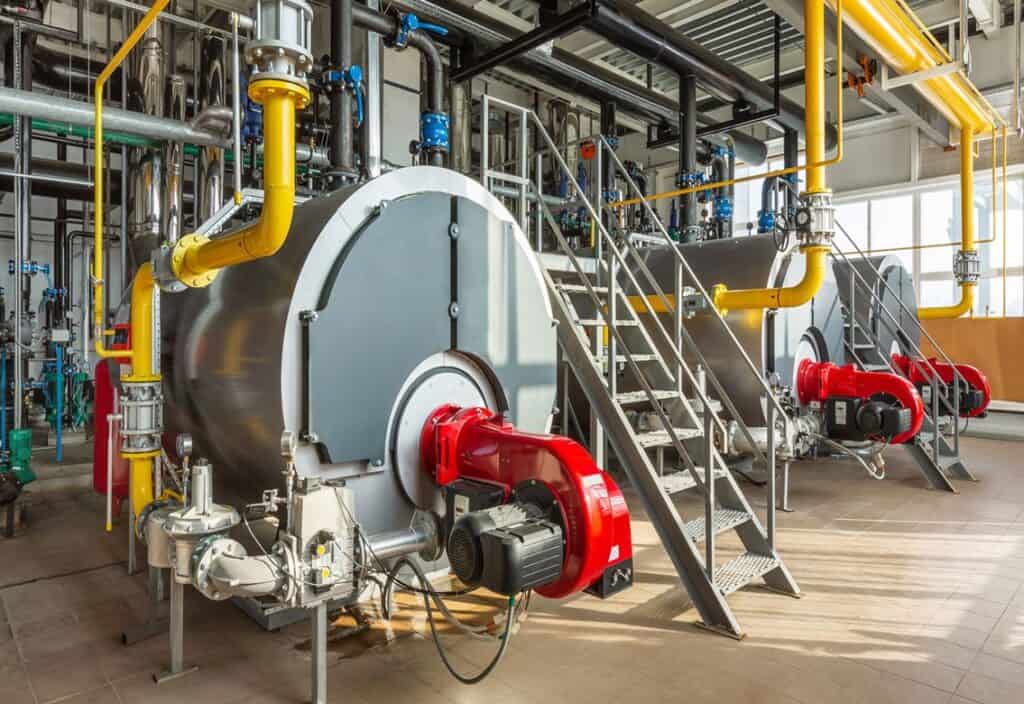
Boiler chemicals in the food industry play a vital role in keeping production safe and efficient. In the food industry, boilers aren’t just background machinery; they’re the beating heart of many operations. From being the main equipment to help pasteurise milk in a dairy plant, to sterilising cans in a beverage facility, to steaming vegetables in a cloud kitchen, boilers quietly keep production moving.
But here’s the thing: without the right boiler chemicals, even the most advanced boiler can turn into a costly, unreliable, and potentially unsafe piece of equipment. Worse, it can directly affect food safety.
Why Are Boiler Chemicals Needed in Food Processing?
If you’ve ever had a kettle build up white scale or rust, you’ve already seen on a small scale what boilers battle every day.
Inside industrial boilers, these three main enemies threaten performance and safety:
- Scale deposits – Calcium and magnesium salts settle on boiler tubes, forming rock-hard layers. Even a 1 mm scale can reduce heat transfer efficiency by up to 10%, meaning higher fuel costs.
- Corrosion – Oxygen and acidic conditions eat away metal surfaces, leading to leaks, unsafe pressure conditions, and premature equipment failure.
- Microbial contamination – Feedwater and condensate return lines can harbor bacteria and slime-forming organisms, risking contamination in food-contact steam.
The consequences?
- Lower energy efficiency – You burn more fuel for the same output.
- Unexpected downtime – Production stops, orders get delayed.
- Food safety risks – In the worst cases, contaminated steam can reach the food.
Processing aids are used to help manufacturing in the food and beverage industry. Throughout the years, the importance of these processing aids has evolved, and today they play a crucial role in improving production efficiency, enhancing food safety, and maintaining the highest quality product possible. Boiler chemicals, when food-grade and properly dosed, are an important category of these aids—quietly ensuring that steam generation remains safe, efficient, and compliant.
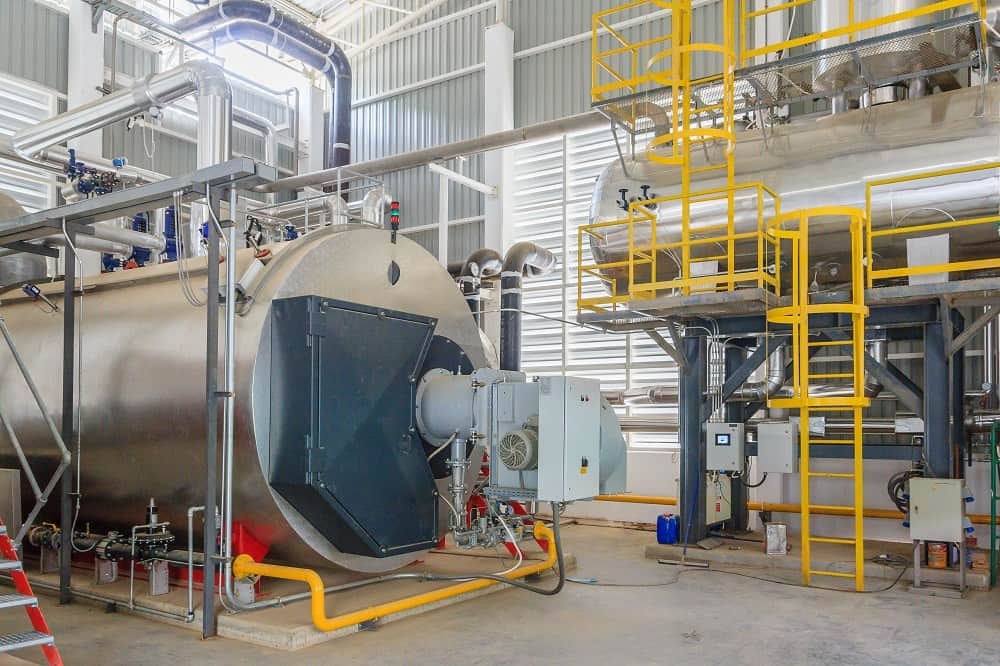
When it comes to boiler operation in the food industry, accurately assessing steam demand is just as important as choosing the right chemicals. Without knowing your plant’s exact steam and hot water needs, selecting and maintaining a boiler system, plus its chemical regimen, becomes guesswork rather than a structured, food-safe strategy.
The solution?
A strategic boiler water treatment program with carefully selected, food-safe chemicals that protect the system and meet food industry regulations.
Types of Boiler Chemicals Used in the Food Industry
| Chemical Name | Purpose | Form | Food-Grade Compliance | Key Notes |
| Citric Acid | Descaler / Cleaning | Powder / Liquid | BIS: IS 13186:1991 (Source) | Biodegradable and non-toxic; removes mineral scale |
| Phosphoric Acid | Scale and rust remover | Liquid | Generally recognized as safe (FDA)(Source) | Used in CIP; must be rinsed |
| Sodium Sulfite | Oxygen scavenger | Powder / Liquid | FDA 21 CFR 173.310(Source) | Removes oxygen; safe in regulated doses |
| DEHA (Diethyl hydroxylamine) | Oxygen scavenger | Liquid | FDA 21 CFR 173.310(Source) | Volatile; acceptable for food-contact steam |
| Volatile Amines (e.g. Morpholine, Cyclohexylamine) | Corrosion inhibitor for condensate lines | Liquid | FDA-approved in limits(Source) | Must be controlled to prevent overexposure |
| Polymer Dispersants | Prevent scale/sludge | Liquid | Must be GRAS/FDA-approved (Source) | Controls hardness buildup; verify compliance |
Special Considerations for Food-Contact Steam
Steam is used directly in food applications like:
- Cooking (e.g., steaming vegetables or seafood)
- Sterilizing containers before filling
When steam touches food, regulations tighten:
- Chemicals must be on the approved list (FDA 21 CFR 173.310, EU food additive standards, or national equivalents).
- Dosing must stay within safe limits—even approved chemicals can be harmful if overdosed.
- Hydrazine, high-phosphate blends, and non-food-grade amines are strictly avoided.
Pro Tip: For food-contact steam, DEHA is often preferred over sodium sulfite because it travels with the steam to protect the entire system.
Best Practices for Boiler Chemical Use in Food Industry
- Regular Water Testing
Monitor key boiler water parameters such as pH, hardness, TDS, conductivity, and oxygen levels. This prevents scale, corrosion, and contamination. Maintain daily/weekly test records to ensure compliance and performance. - Use Food-Grade Chemicals from Approved Suppliers
Only use chemicals that are food-safe (GRAS, FDA,NSF or BIS approved), especially if steam contacts food or surfaces. Suppliers must provide CoA, SDS, and food safety documentation to support regulatory compliance. - Avoid Overdosing Chemicals
Excess chemicals can lead to food contamination, equipment corrosion, or regulatory violations. Use automated dosing systems and adjust based on actual test results, not fixed schedules. - Follow Blowdown and Cleaning Schedules
Perform regular blowdown to control TDS and sludge buildup. Schedule chemical cleaning to remove scale and maintain boiler efficiency. Document all maintenance activities. - Train Staff on Chemical Safety
Ensure staff are trained in chemical handling, PPE use, spill response, and SDS awareness. This reduces risks of accidents and ensures safe operations in the food environment.

A Word on Sustainability
Food manufacturers are increasingly moving towards eco-friendly boiler chemicals, biodegradable, phosphate-free, and low-toxicity solutions. These not only protect the boiler but also reduce wastewater treatment loads and support corporate sustainability goals.
Conclusion
A boiler is more than just a source of steam; it’s a critical control point for both production efficiency and food safety.
The right boiler chemical program:
- Protects your equipment from scale, corrosion, and contamination
- Ensures compliance with FSMS standards like ISO 22000, FSSC22000, BRCGS
- Safeguards your food products from steam-borne hazards
In food processing, ignoring boiler treatment isn’t just a maintenance issue; it’s a food safety risk. A well-maintained, chemically balanced boiler means cleaner steam, safer products, and a smoother, more profitable operation.