
FSSAI Food Recall Analysis provides valuable insights into India’s food safety landscape using recall data published by the Food Safety and Standards Authority of India (FSSAI) through the Food Safety Compliance System (FoSCoS). This analysis examines 154 food recall records published between February 2024 and July 2026, highlighting trends in product categories, regulatory actions, and recall implementation. A small number of records contain incomplete details, limiting product categorization for a few recalls.
FSSAI Food Recall Analysis: Quarterly Recall Trends
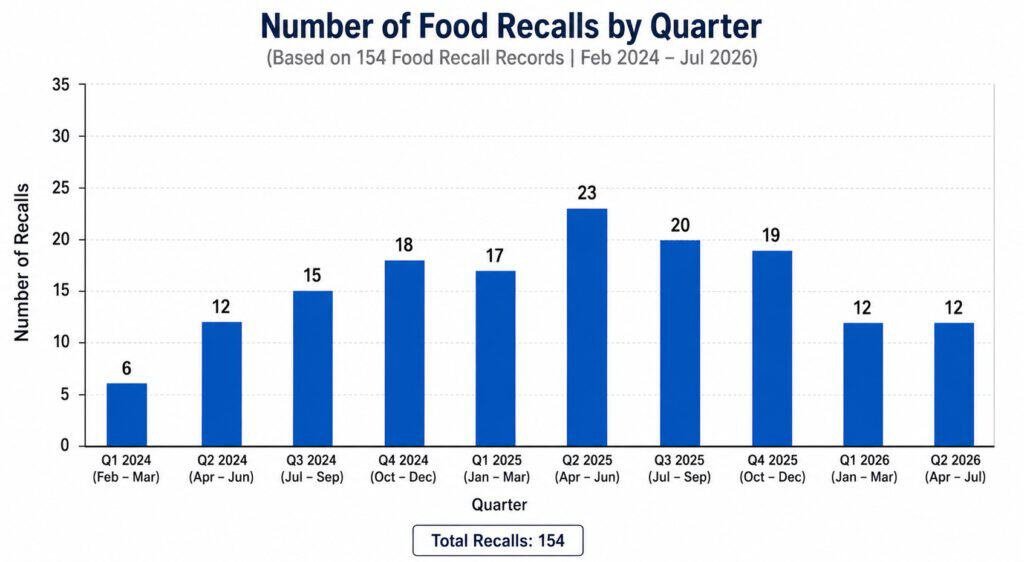
The quarterly trend shows that food recalls have been reported consistently throughout the analysis period, indicating that recall activity has become a routine component of India’s food safety surveillance system rather than an occasional regulatory exercise. While the number of recalls fluctuates across quarters, there is no prolonged period without recall activity, reflecting continuous monitoring of the food supply chain. Variations may reflect regulatory inspections, surveillance programs, laboratory testing, consumer complaints, or voluntary reporting by Food Business Operators. Overall, the trend demonstrates sustained regulatory oversight.
Food Recalls Continue Across Diverse Product Categories
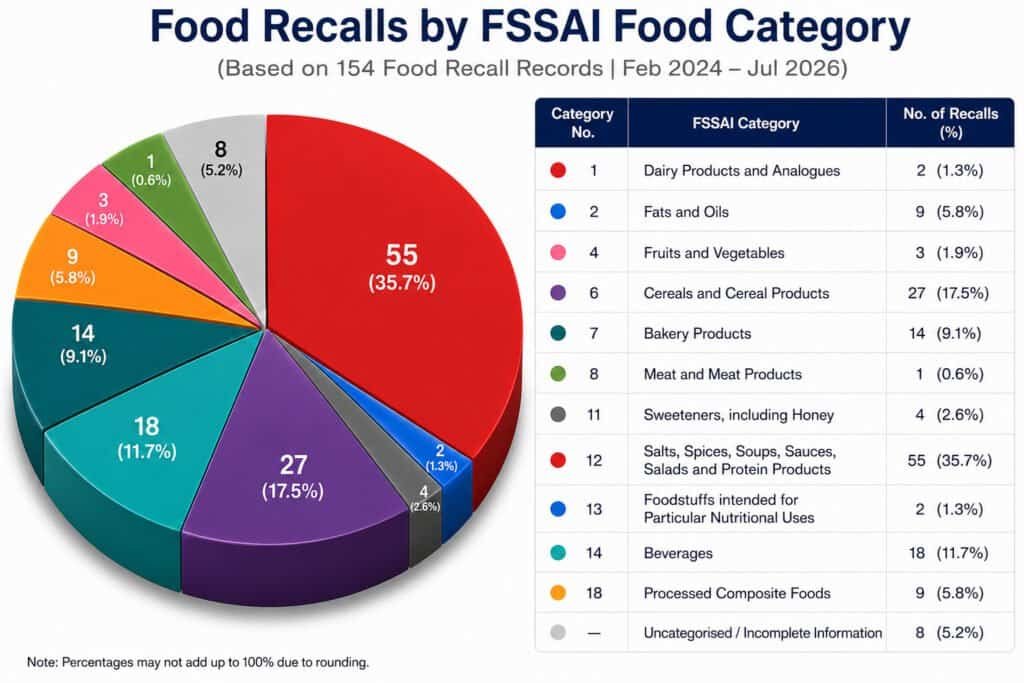
The recalls span multiple food categories under the FSSAI Food Category System (Appendix A), demonstrating that regulatory action extends across a broad range of food products. Category 12 (Salts, Spices, Soups, Sauces, Salads and Protein Products) accounted for the largest share with 55 recalls (35.7%), followed by Category 6 (Cereals and Cereal Products) with 27 recalls (17.5%). Category 14 (Beverages) recorded 18recalls (11.7%), while Category 7 (Bakery Products) accounted for 14 recalls (9.1%). Categories 2 (Fats and Oils) and 18 (Composite Foods) each recorded 9 recalls (5.8%).
Regulatory Authorities Continue to Lead Recall Actions
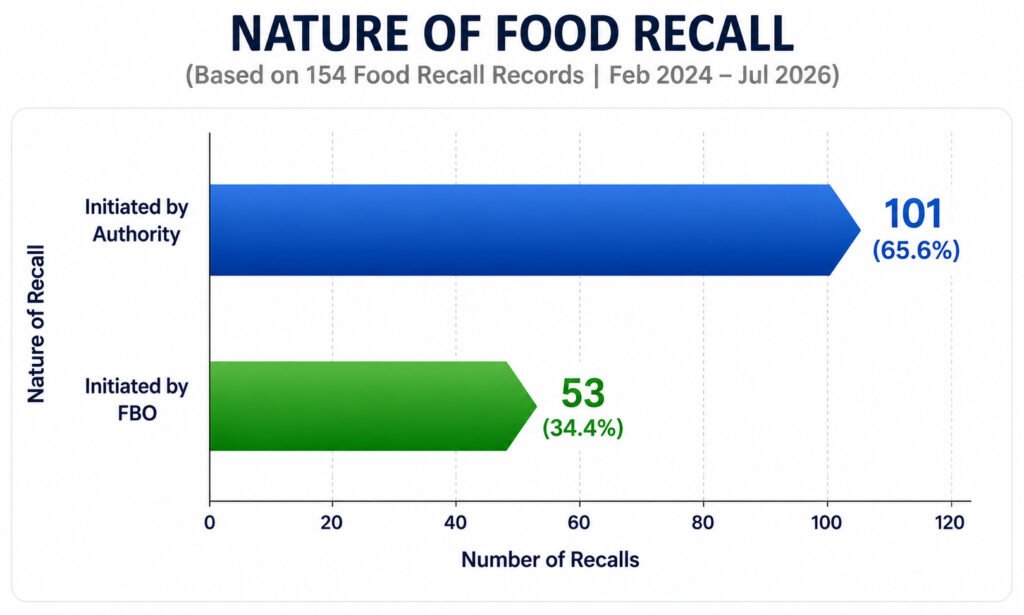
The analysis shows that regulatory authorities continue to initiate most food recalls. Of the 154 recall records, 101 recalls (65.6%) were initiated by regulatory authorities, while 53 recalls (34.4%) were initiated voluntarily by Food Business Operators (FBOs). Although voluntary recalls account for more than one third of the records, regulatory authorities remain the primary drivers of recall activity.
Recall Status Highlights Opportunities for Better Transparency

One of the most significant observations from the data is the current status of published recalls. Of the 154 recalls, 86 (55.8%) remain under the status of “Initiated”, 51 (33.1%) are marked as “In Progress”, and only 17 (11.0%) have been updated as “Completed”. This indicates that nearly 89% of the published recall records have not yet reached documented closure on the FoSCoS portal.
The Food Safety and Standards (Food Recall Procedure) Regulations, 2017 require Food Business Operators to notify the Food Authority and initiate a recall immediately, but not later than 24 hours after becoming aware that a food product requires recall. However, the publicly available data does not indicate whether recalls currently classified as “Initiated” or “In Progress” are genuinely ongoing or whether completed recalls have not yet been updated on the portal. Without documented recall closure and regular progress updates, it is difficult to independently assess the effectiveness of recall implementation or determine whether affected products have been successfully removed from the market.
Does the Current Recall Information Reach Consumers?
Although the FoSCoS portal makes recall information publicly available, its effectiveness ultimately depends on whether consumers are aware of it. Most consumers are unlikely to routinely visit the portal before purchasing or consuming food products. As a result, important recall information may remain accessible but fail to reach the people most affected. Wider dissemination through manufacturers, retailers, e-commerce platforms, mobile applications, social media, and mainstream news channels could improve consumer awareness and help identify recalled products more effectively.
Conclusion
This FSSAI Food Recall Analysis highlights the important role of the FoSCoS Food Recall portal in improving transparency within India’s food safety framework. The published data demonstrates active regulatory surveillance across a wide range of food categories and continued participation by both regulatory authorities and FBOs in the recall process. At the same time, the large proportion of recalls remaining under “Initiated” and “In Progress” highlights the need for more timely status updates and complete recall records.
The analysis also identifies opportunities to strengthen the publicly available recall database. Providing information on recall effectiveness, standardizing the reporting of recall reasons, ensuring timely updates to recall status, and improving communication with consumers would enable a more comprehensive assessment of recall implementation. Collectively, these improvements would enhance transparency, support more meaningful trend analysis, and further strengthen confidence in India’s food recall system.
Preventing Recalls Through Regulatory Compliance
Many food recalls arise from non-compliance with regulatory requirements, inadequate food safety controls, incorrect labelling, or other preventable issues. Strengthening compliance throughout the product lifecycle can help businesses minimise regulatory risks and reduce the likelihood of product recalls.
Food Safety Works supports FBOs with comprehensive regulatory and food safety solutions, including FSSAI licensing and registration, label compliance, regulatory assessments, food safety audits, documentation, training, and import and export compliance. A preventive approach to compliance not only reduces the risk of recalls but also helps protect consumer trust and brand reputation.