

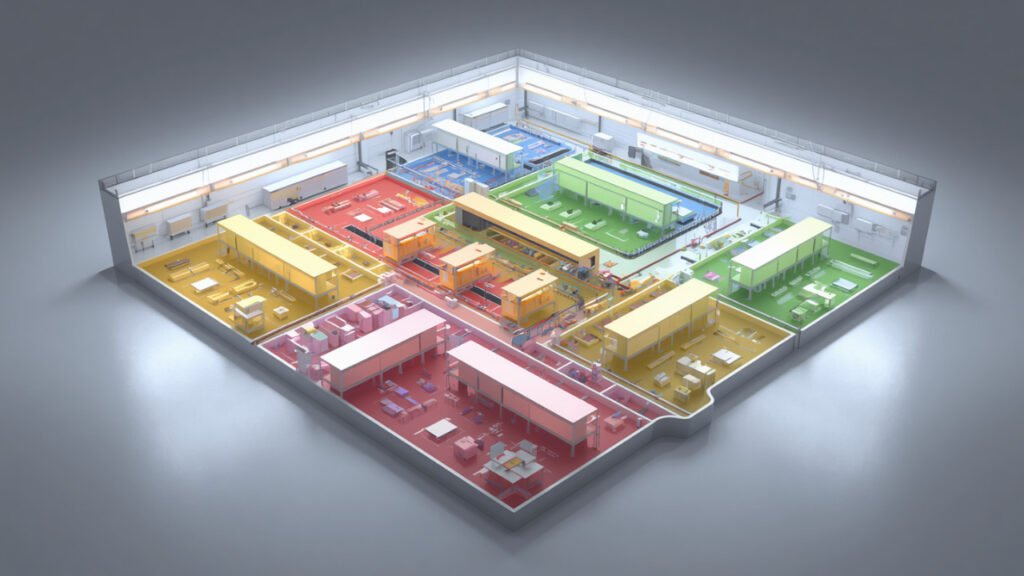
In food processing facilities, layout and design are not merely matters of physical arrangement; they are critical determinants of food safety, operational efficiency, and regulatory compliance. A well-planned facility design establishes the foundation for hygienic practices, streamlined workflows, and effective contamination control. When layout considerations are aligned with food safety objectives, processes such as production, sanitation, and personnel movement operate seamlessly and consistently.
A food safe facility begins with a clearly defined and logical process flow. Materials should move in a unidirectional sequence from receiving and storage through processing and packaging to final dispatch. Any deviation from this flow, particularly where raw and finished products intersect, significantly increases the risk of cross contamination. Therefore, zoning becomes a fundamental design principle. The physical and visual segregation of raw, semi processed, and ready to eat areas ensures process integrity and minimizes the risk of product mix ups, especially during high volume operations.
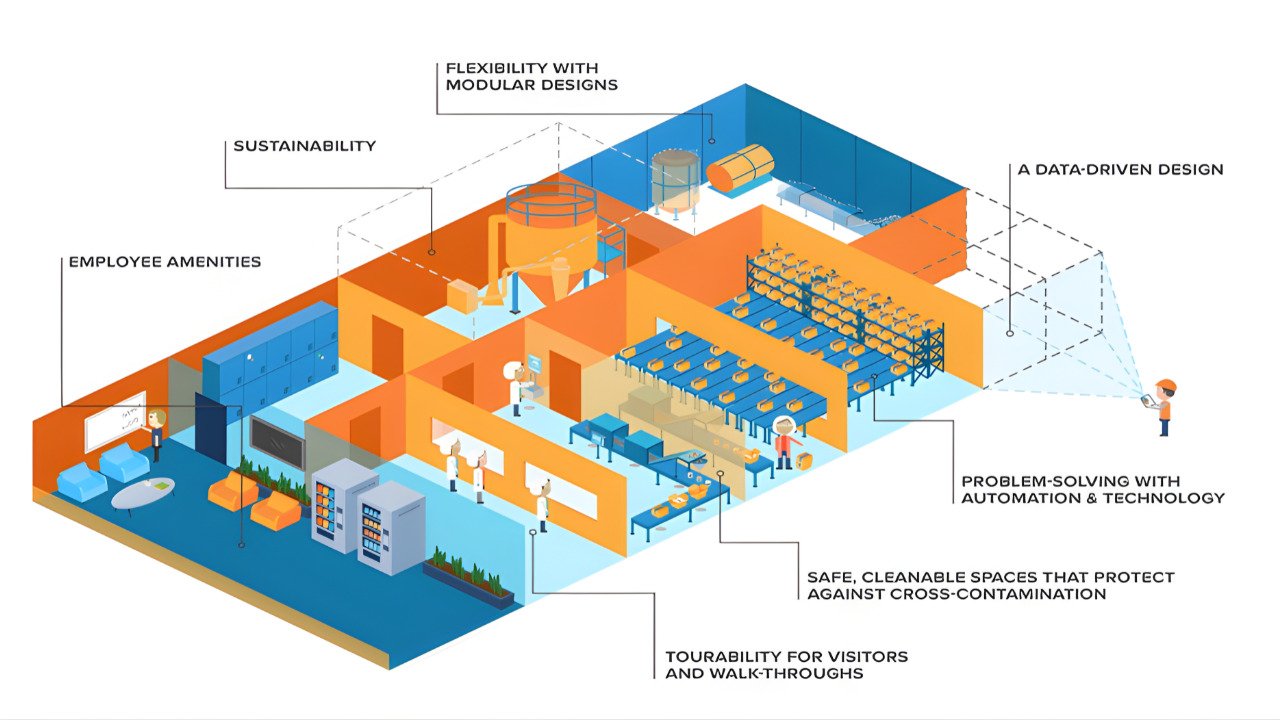
Equally important are the structural elements of the facility, which play a vital role in maintaining hygiene. Floors, walls, and ceilings must be constructed using smooth, non-absorbent, and easily cleanable materials that resist cracking and deterioration. Proper floor gradients and drainage systems are essential to prevent water accumulation, which is a common indicator of poor sanitation control. Sealed surfaces reduce the risk of microbial growth, while adequately fitted insect proof screens on openings such as windows and vents serve as effective barriers against pest entry.
Equipment Layout
Equipment layout must also be strategically planned to support effective cleaning and maintenance. Inaccessible areas between or beneath equipment often become accumulation points for dirt and debris, posing a long-term hygiene risk. Providing adequate spacing between equipment and walls, along with proper sealing of fixed installations, facilitates thorough cleaning and inspection. Early-stage planning of equipment placement can significantly reduce future sanitation challenges and operational inefficiencies.
Storage Design
Storage design is another critical aspect that directly impacts food safety. Clear segregation of raw materials, semi processed goods, and finished products is necessary to prevent cross contamination and ensure traceability. Materials should be stored off the floor and at a suitable distance from walls to allow proper air circulation and enable effective pest control measures. Non-food items such as cleaning agents, chemicals, and maintenance tools must be stored in designated, clearly labelled areas, strictly separated from food handling zones.
In addition to material and equipment flow, personnel movement must be carefully controlled within the facility. Improper staff movement between clean and unclean zones can serve as a significant source of contamination. The provision of handwashing stations, changing rooms, and clearly defined pathways supports hygienic practices and reduces associated risks.
Conclusion
In conclusion, an effective facility layout is not defined by aesthetics but by functionality and its ability to uphold food safety standards. Every design element, from floor slopes to equipment positioning, contributes to the overall food safety management system. When layout and design are approached strategically, they enhance operational efficiency, simplify sanitation processes, and ensure the consistent production of safe and compliant food products.